

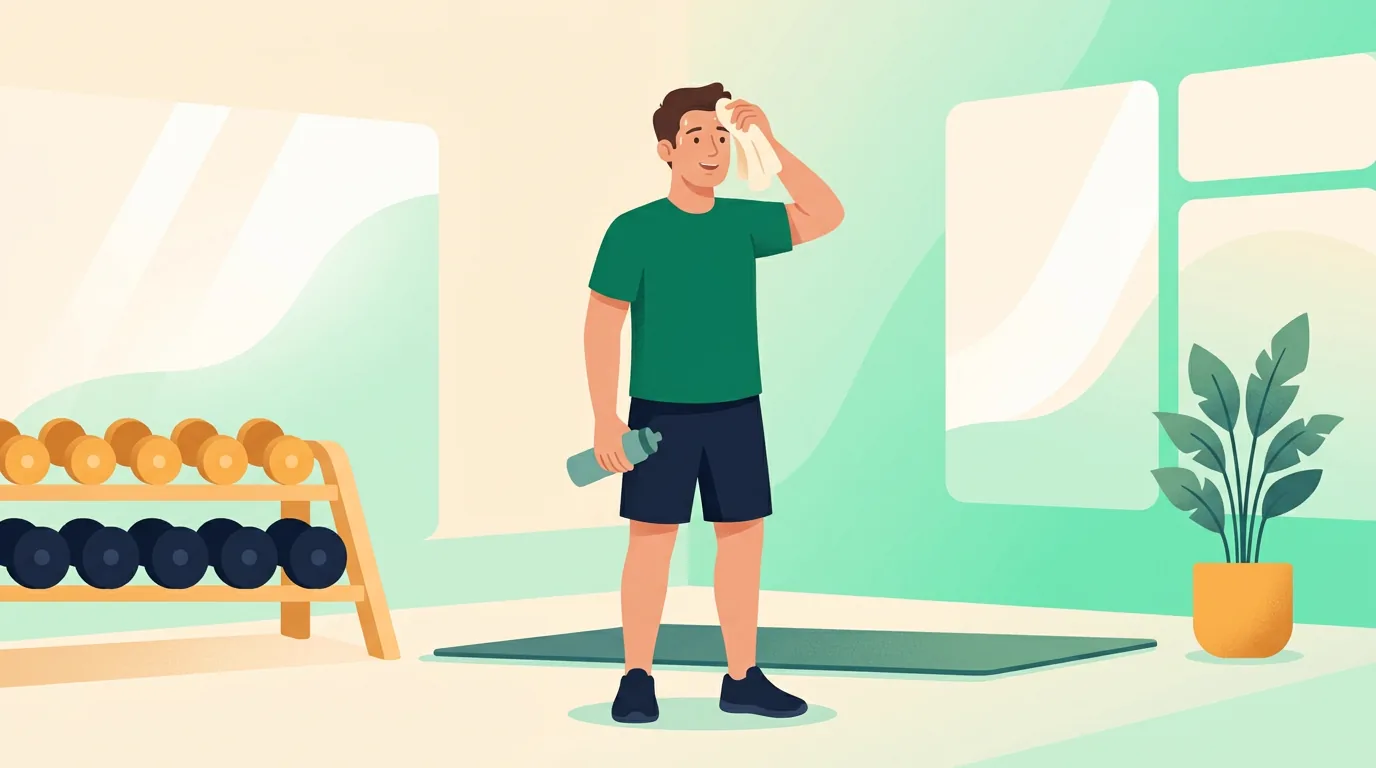
You finish a workout dripping wet and step on the scale: a pound or two lighter. So does sweating burn calories, and is a sweaty session a fat-burning one?
This guide explains what sweat really is, where the calories actually go, what saunas and sweat suits can and can’t do, and how to work out how much water you lost.
Key takeaways
- Sweat is your body’s cooling system. The weight you lose by sweating is water, and it comes back when you drink.
- Calories are burned by the work your muscles do, not by the sweat. Weight loss comes from a calorie deficit over time, the CDC says.
- MedlinePlus says to drink 16 to 24 ounces (480 to 720 mL) of fluid for every pound (450 g) you lose while exercising.
Does sweating burn calories?
Not in any way that helps with fat loss. Sweating is how your body cools down, and the weight you lose through sweat is water, which comes back when you drink. The calories come from the exercise that made you sweat. A hard workout in cool air can burn as much as one that leaves you soaked.
What sweat actually is
MedlinePlus describes sweat as liquid released from your sweat glands that helps your body stay cool. As it evaporates from your skin, it takes heat with it.
How much you sweat depends on how many sweat glands you have. MedlinePlus says people are born with about 2 to 4 million, and men’s tend to be more active. Heat, exercise, fever, stress, alcohol, caffeine, menopause and some medicines can all make you sweat more.

Sweat weight vs fat loss
MedlinePlus says your body can lose several liters of sweat in an hour of hard exercise. That’s why the scale drops after a sweaty workout. But it’s water weight, and MedlinePlus says to replace any weight lost during exercise with an equal amount of fluid.
| Sweat weight | Fat loss | |
|---|---|---|
| What leaves your body | Water and salts | Stored body fat used for energy |
| How fast | Within an hour | Slowly, over weeks |
| Does it come back? | Yes, when you drink | Only if you eat more than you burn |
| What causes it | Heat and exercise | A calorie deficit (CDC) |
What actually burns calories
The CDC says more physical activity increases the calories your body uses, and that burning calories through activity while eating fewer calories creates the calorie deficit that leads to weight loss. Here’s what a 154-pound (70 kg) person burns, according to the CDC:
| Activity | Calories in 30 minutes | Calories in 1 hour |
|---|---|---|
| Walking (3.5 mph) | 140 | 280 |
| Bicycling (under 10 mph) | 145 | 290 |
| Walking (4.5 mph) | 230 | 460 |
| Swimming (slow freestyle laps) | 255 | 510 |
| Running or jogging (5 mph) | 295 | 590 |
People who weigh more burn more, and people who weigh less burn fewer, the CDC notes. For overall health, it recommends at least 150 minutes a week of moderate activity plus muscle-strengthening work on 2 days. See how much activity it takes in our guide to burning 1000 calories a day.
Does a sauna burn calories?
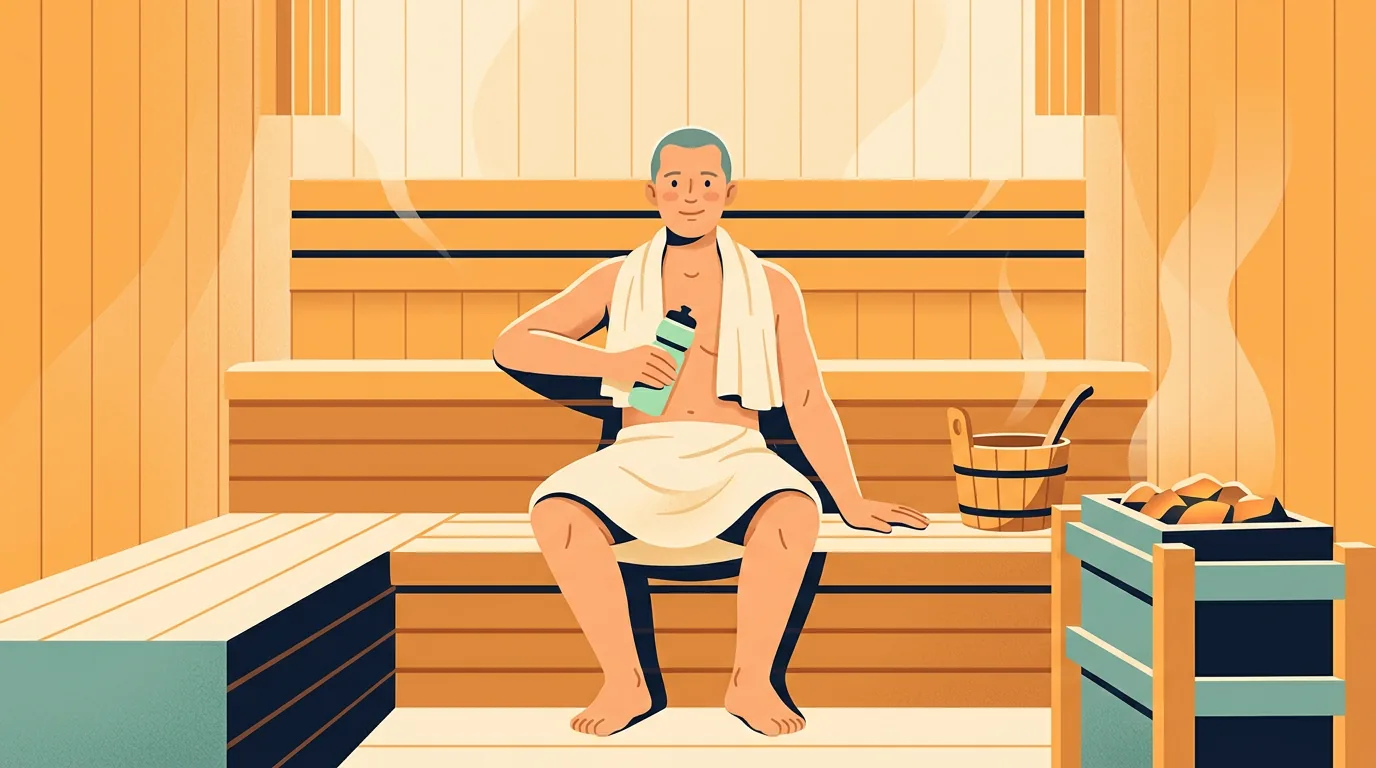
A sauna raises your heart rate, so your body does use a little more energy. In a 2019 study in BioMed Research International, 45 young overweight men sat in a hot dry sauna for four 10-minute sessions. Their heart rate and energy use rose, and they lost about 0.65 kg (1.4 lb) of body mass over the hour.
That loss was mostly sweat, so it returns when you drink. So does sweating burn calories in a sauna? Barely, and the scale drop is water. The researchers also noted that the heart strain was greatest in the men with the most obesity. If you have heart problems or high blood pressure, are pregnant, or feel unwell, ask your doctor before using a sauna.
Sweat suits and waist trainers
Sauna suits, plastic wraps and sweat belts trap heat so you sweat more. More sweat means more water lost, not more fat. Does sweating burn calories faster in a sweat suit? No; the work you do is the same. Trapping heat during exercise can also make it harder for your body to cool down.
The CDC’s NIOSH warns that heat exhaustion causes heavy sweating, headache, dizziness, nausea, weakness and thirst. Heat stroke can cause confusion, slurred speech, seizures and fainting, and can be fatal if treatment is delayed. If someone shows heat stroke signs, call 911, move them somewhere cool and cool their skin with water.
Sweat loss calculator
So does sweating burn calories at all? Barely, but it does remove water. Want to know how much water you lose in a workout? Weigh yourself before and after, add what you drank, and this calculator shows your sweat loss and how much to drink back.
Weigh yourself (no sweaty clothes) before and after a workout to see how much water you lost, and how much to drink back. Nothing is saved or sent anywhere.
When sweating is a concern
Sweating during exercise and in the heat is normal. MedlinePlus says to contact a provider if:
- You sweat heavily, for a long time, or for no clear reason
- Sweating comes with chest pain, fever, a racing heartbeat, shortness of breath or weight loss
- You often wake up soaked from night sweats
If sweating comes with chest pain or shortness of breath, call 911 or your local emergency number.

Frequently asked questions
Does sweating mean you are burning fat?
No. Sweating means your body is cooling itself. The calories come from the work your muscles do, and fat loss comes from a calorie deficit over time, the CDC says. You can burn plenty of calories without sweating much.
Does sweating make you lose weight?
Only water weight, which comes back when you drink. MedlinePlus says to replace any weight lost during exercise with an equal amount of fluid, about 16 to 24 ounces for every pound lost.
Does sweating burn calories in hot weather?
Not because of the sweat itself. Heat and hard work both make you sweat, but only the work burns meaningful calories. A hard workout in cool air can burn as many calories as the same workout in the heat.
Does a sauna burn calories?
A little. In a 2019 study, young overweight men in a hot sauna had higher heart rates and energy use and lost about 0.65 kg over an hour, but that was mostly sweat that returns when you drink.
Why do I sweat so much when I work out?
MedlinePlus says the amount you sweat depends on how many sweat glands you have, and men’s tend to be more active. Heat, hard exercise, caffeine, stress and some medicines can increase sweating. See a doctor if heavy sweating has no clear reason.
How much water should I drink after sweating?
MedlinePlus says to drink 16 to 24 ounces (480 to 720 mL) of fluid for every pound (450 g) lost while exercising, within the next 6 hours. Weighing yourself before and after a workout shows how much you lost.
What is the laziest way to burn calories?
There is no shortcut, but small amounts of movement add up. The CDC shows that a 154-pound person burns about 140 calories in 30 minutes of walking at 3.5 mph. Saunas and sweat suits mostly remove water, not fat.
The bottom line
Does sweating burn calories? Not in a way that burns fat. Sweat cools you down, and the weight you lose is water that comes back when you drink. Calories are burned by moving your body, and weight loss comes from a calorie deficit over time, so focus on regular activity, eat a little less, and drink back what you sweat out.
Related reading
- Burning 1000 calories a day: is it safe?
- Ice water hack for weight loss
- How many jumping jacks to burn 100 calories