

Vaping withdrawal symptoms are the uncomfortable feelings that show up when your body stops getting nicotine. Think cravings, a short temper, poor sleep and a bigger appetite. They are real, they are common, and they are temporary.
This guide explains the 7 common vaping withdrawal symptoms, other side effects of quitting vaping, how long they tend to last, and what actually helps. Everything here is checked against the CDC, the WHO and the US Surgeon General.
Key takeaways
- The CDC lists 7 common withdrawal symptoms, from cravings to low mood.
- Symptoms are most likely in the first few weeks and are temporary (WHO).
- Medication plus counseling gives adults the best chance of quitting for good (CDC).
Fill in your quit day, reasons and support person on one page.Download the PDF
Want the whole plan, not just the symptoms? Read our how to quit vaping guide for the 5 steps from quit day to staying quit.
What are vaping withdrawal symptoms?
Vaping withdrawal symptoms are the physical and emotional changes that happen when you stop using nicotine. The CDC lists cravings, irritability, restlessness, trouble concentrating, trouble sleeping, hunger and anxious or low mood. The WHO says symptoms are most likely in the first few weeks after quitting, and that they are temporary.
Why do they happen? The CDC says nicotine is highly addictive, and that quitting vaping is likely similar to quitting smoking because both involve nicotine addiction. When nicotine stops, your body and brain need time to adjust.
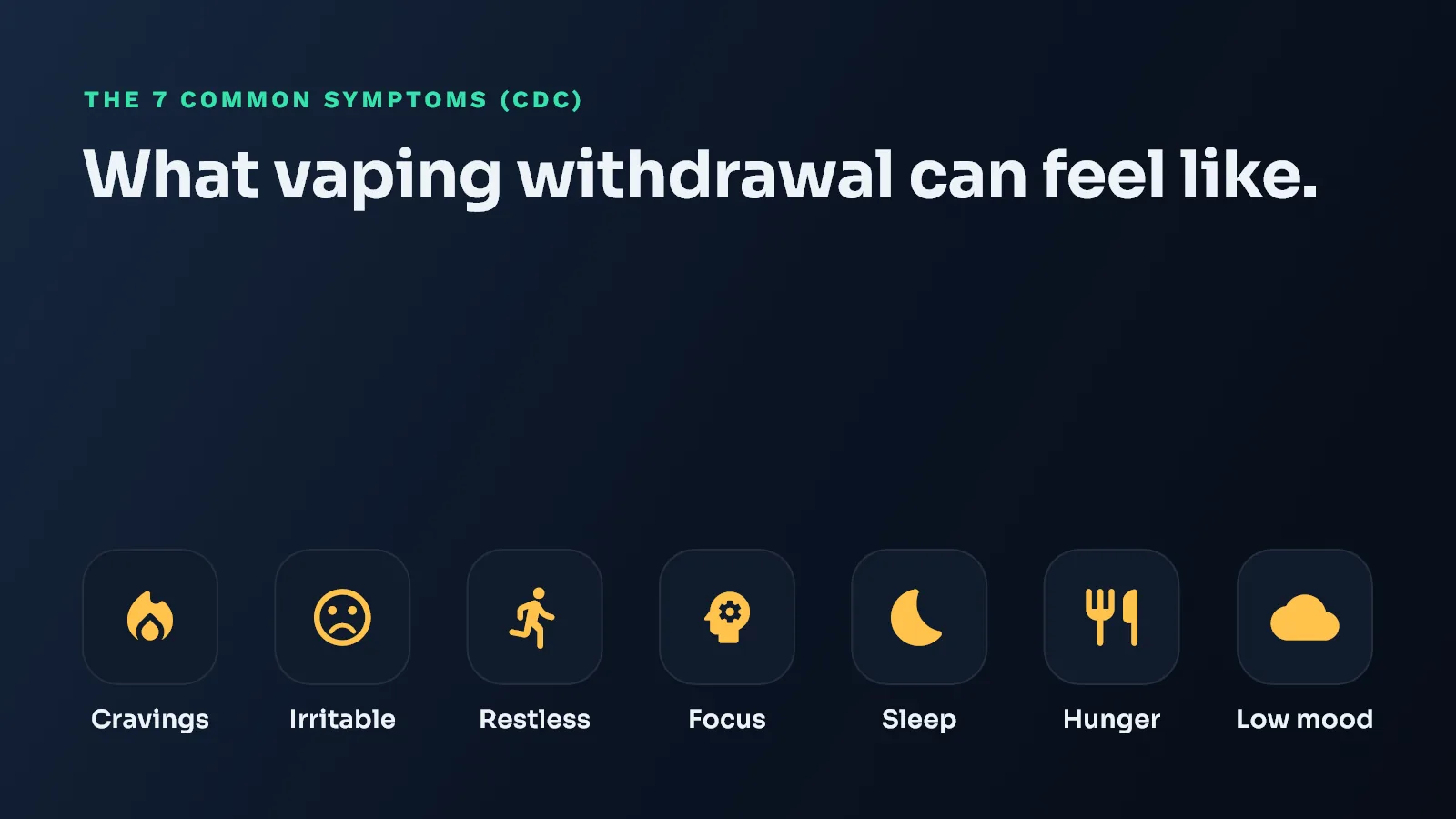
Tick what you notice. These are the 7 common ones the CDC lists.
The 7 common vaping withdrawal symptoms (and what helps)
The CDC’s list of common withdrawal symptoms was written for people quitting smoking. Vapes deliver nicotine too, so the same symptoms apply. Here they are, with the CDC’s own tips for each.
| Symptom | What it can feel like | What helps (CDC) |
|---|---|---|
| 1. Cravings | A strong urge to vape, sometimes overwhelming | Keep busy, be active, and remember a craving will always pass |
| 2. Irritable or grouchy | Snapping at people, feeling on edge | Take a few deep breaths and remind yourself why you are quitting |
| 3. Jumpy or restless | Can’t sit still | Walk around for a bit, and cut back on caffeine |
| 4. Trouble concentrating | Foggy, easily distracted | Cut yourself some slack in the first days, and limit demanding tasks |
| 5. Trouble sleeping | Hard to fall or stay asleep | No caffeine late in the day, no screens in bed, a regular sleep schedule |
| 6. Hunger or weight gain | Snacking more than usual | Snack smart with celery, carrots or sugar-free mints, and stay active |
| 7. Anxious, sad or depressed | Low, worried or teary | Be active, structure your day, and connect with supportive people |
Not everyone gets all seven vaping withdrawal symptoms. Some people mostly notice cravings and poor sleep. Others mainly feel irritable. All of this is a normal part of quitting.
Other side effects of quitting vaping
The WHO lists some extra physical symptoms, beyond the main vaping withdrawal symptoms, that people can notice after quitting tobacco. They can feel worrying, but the WHO says they are temporary:
- Coughing
- Light-headedness or dizziness
- Headaches
- Constipation or stomach pain
- Tiredness
- Trouble concentrating and a bigger appetite
- Tingling in the hands or feet
The WHO’s tips are simple. Sip warm water or suck on sugar-free cough drops for a cough. For tiredness, get enough sleep, do light exercise like brisk walking, and eat small, regular meals. It also suggests swapping coffee for ginger or herbal tea.
If any of your vaping withdrawal symptoms is severe, keeps getting worse, or you are not sure it is from quitting, see a doctor.
How long do vaping withdrawal symptoms last?
There is no official day-by-day vaping withdrawal timeline, and anyone who promises one is guessing. Here is what the health agencies actually say.
| Question | What the sources say | Source |
|---|---|---|
| When are symptoms most likely? | In the first few weeks after quitting. They are temporary. | WHO |
| How long does one craving last? | For most people, the urge begins to dissolve after a few minutes. | CDC |
| Do cravings come back? | Yes, you will get more urges, but they weaken with time. | CDC |
| How long does restlessness last? | Feeling jumpy or restless in the first days or weeks is normal. | CDC |
| What about low mood? | If you don’t feel better in a couple of weeks, talk to a healthcare provider. After a few months smoke-free, anxiety and depression are often lower than before. | CDC |
| Do symptoms go away? | Over time, withdrawal symptoms fade as long as you stay nicotine-free. | CDC |
In short, vaping withdrawal symptoms are most likely early on and fade with time.
Cravings can keep coming back for a while, often set off by routines like coffee, driving or friends (CDC). Our guide to nicotine cravings after quitting vaping has 12 ways to ride them out.
A simple plan to get through vaping withdrawal
Most pages just list symptoms. Few tell you what to do on the day. So here is a checklist, built from CDC and WHO advice.
Before your quit day
- Make a quit plan, as the CDC recommends. Pick a date and write down your reasons.
- Remove every vape, pod and charger from your home, car and bags.
- Stock up on water, sugar-free mints, and crunchy snacks like carrots and celery.
- Talk to a doctor or pharmacist about medication. The CDC says FDA-approved quit medications can double the chance of quitting smoking for good.
Every day while vaping withdrawal symptoms are strong
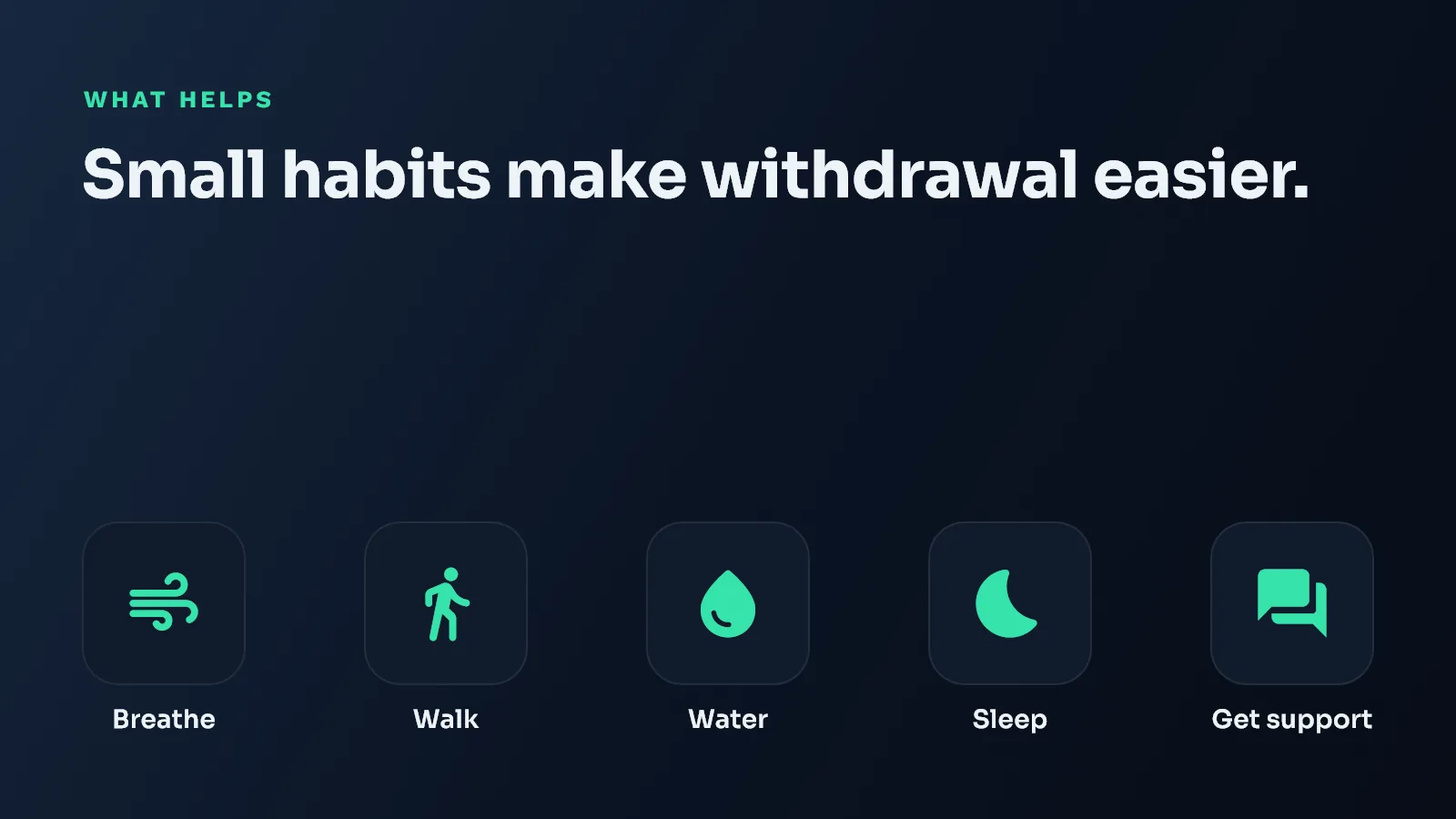
- Move a little: a walk or a flight of stairs when you feel restless.
- Breathe slowly through cravings. They usually start to fade within minutes.
- Cut caffeine after lunch to protect your sleep.
- Eat small, regular meals so hunger doesn’t feel like a craving.
- Tell one person how you are doing.
When a craving hits
- Name it: “This is a craving. It will pass.”
- Do something with your hands and mouth: a toothpick, a straw or a cinnamon stick.
- Sip water, then change where you are for five minutes.
Is it safe to quit vaping cold turkey?
The CDC doesn’t say quitting all at once is better or worse than cutting down. What it does recommend is a quit plan, and it says adults have the best chance of quitting for good when they use medication and counseling together.
If you are pregnant, under 18, take other medicines or have a health condition, talk to a doctor before choosing a method. They can help you pick what is safest for you.
When to get help
You don’t have to do this alone. Reach out for support if your vaping withdrawal symptoms feel like too much:
- If low mood or anxiety doesn’t improve in a couple of weeks, or feels unmanageable, talk to a healthcare provider (CDC).
- In the US, call 1-800-QUIT-NOW for free, confidential quit coaching.
- If you have thoughts of harming yourself, call or text 988 in the US, any time. In an emergency, call 911 or your local emergency number.
Outside the US, search for your country’s free quitline.
Tools that make vaping withdrawal easier
The CDC lists free text support such as SmokefreeTXT and the quitSTART app. Many people also like having a tool in their pocket for vaping withdrawal symptoms, especially the moment a craving hits.
That is why I built QuitAce, a quit-vaping app for Android. It has one-tap SOS breathing for cravings, a craving log that shows your triggers, your own recorded reason to quit, and a counter for days and money saved.
Worried about your weight while you quit? Our article on whether vaping has calories looks at what really changes.
Frequently asked questions
How long do vaping withdrawal symptoms last?
There is no fixed timeline. The WHO says withdrawal symptoms are most likely in the first few weeks and are temporary. The CDC says single urges usually start to fade within a few minutes, and that symptoms fade over time as long as you stay nicotine-free.
What are the signs of vaping withdrawal?
The CDC lists 7 common symptoms: cravings, feeling irritated or grouchy, feeling jumpy or restless, trouble concentrating, trouble sleeping, feeling hungrier, and feeling anxious, sad or depressed.
Is it safe to quit vaping cold turkey?
The CDC does not say one method is better than another. It recommends making a quit plan and says medication and counseling together give the best chance of quitting. If you are pregnant or have a health condition, talk to a doctor first.
Can quitting vaping make you feel sick?
Some people do feel unwell for a while. The WHO lists coughing, light-headedness, dizziness, headaches, constipation, stomach pain and tiredness among symptoms after quitting tobacco, and says they are temporary. See a doctor if a symptom is severe or worries you.
Will I gain weight when I quit vaping?
Some people do. In smoking research, the Surgeon General found the average gain was about 5 pounds and called it a minimal health risk compared with the benefits of quitting. The CDC suggests low-calorie snacks and staying active.
The bottom line
If you are in the middle of it right now, hang in there. Vaping withdrawal symptoms are real, common and temporary. The WHO says they are most likely in the first few weeks, and the CDC says a single craving usually starts to fade within a few minutes. If they feel unmanageable, or you do not feel better in a couple of weeks, talk to a healthcare provider.
If you’re pregnant, have a health condition or take medication, talk to a doctor or pharmacist about the safest way to quit.
Related reading
- How to quit vaping: a simple 5-step guide
- Nicotine cravings: how long they last and how to stop them
- Cough after quitting vaping: 5 facts and what helps
Sources
- CDC: 7 Common Withdrawal Symptoms
- CDC: Tips for Quitting
- CDC: Vaping and Quitting
- CDC: Health Effects of Vaping
- WHO Regional Office for Africa: Today is a good day to quit tobacco
- US Surgeon General via CDC MMWR: The Health Benefits of Smoking Cessation (1990), executive summary
[…] which is why it helps to treat a cough after quitting vaping as its own question. Our guide to vaping withdrawal symptoms covers the full […]
[…] the full list and tips for each one? Read our guide to vaping withdrawal symptoms. Coughing is not on the CDC list, so we cover it on its own in cough after quitting […]