

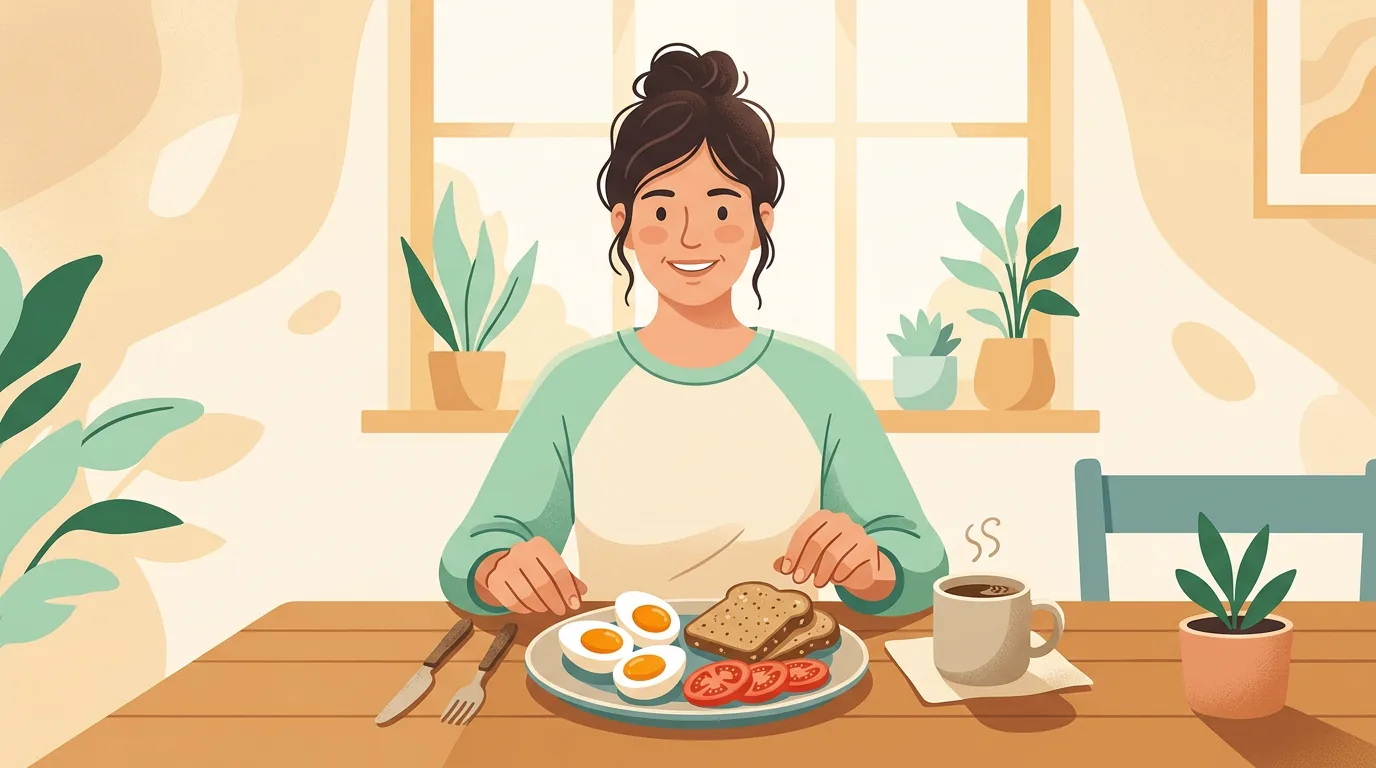
If you track what you eat, you’ve probably wondered how many calories are in 2 eggs. The short answer is about 143 for two large eggs, before you add any oil, butter or cheese.
This guide gives 2 eggs calories for every common size and cooking method, using the US government’s food database. You’ll also see the protein, fat and cholesterol, plus a quick calculator for your own breakfast.
Key takeaways
- Two large raw eggs have about 143 calories and 12.6 grams of protein, according to USDA FoodData Central.
- Cooking with fat adds calories: two fried large eggs come to about 180, and two scrambled large eggs about 182.
- Two large eggs carry about 372 mg of cholesterol, which is more than the FDA’s Daily Value of 300 mg.
How many calories in 2 eggs?
Two large eggs have about 143 calories raw or poached and about 155 hard-boiled, according to USDA FoodData Central. Fried in fat, they come to about 180 calories. Scrambled with milk and fat, they come to about 182. The egg itself barely changes; the extra calories come from what goes in the pan.
2 eggs calories by size
Egg size matters more than most people think. USDA FoodData Central lists raw whole eggs at 143 calories per 100 grams, with a small egg weighing about 38 grams and a jumbo egg about 63 grams. Here are 2 eggs calories by size.
| Egg size (two eggs) | Weight | Calories | Protein |
|---|---|---|---|
| Small | 76 g (2.7 oz) | 109 | 9.6 g |
| Medium | 88 g (3.1 oz) | 126 | 11.1 g |
| Large | 100 g (3.5 oz) | 143 | 12.6 g |
| Extra large | 112 g (4 oz) | 160 | 14.1 g |
| Jumbo | 126 g (4.4 oz) | 180 | 15.9 g |
Most nutrition labels and recipes use large eggs, so if a carton doesn’t say, assume large.
Boiled, fried or scrambled
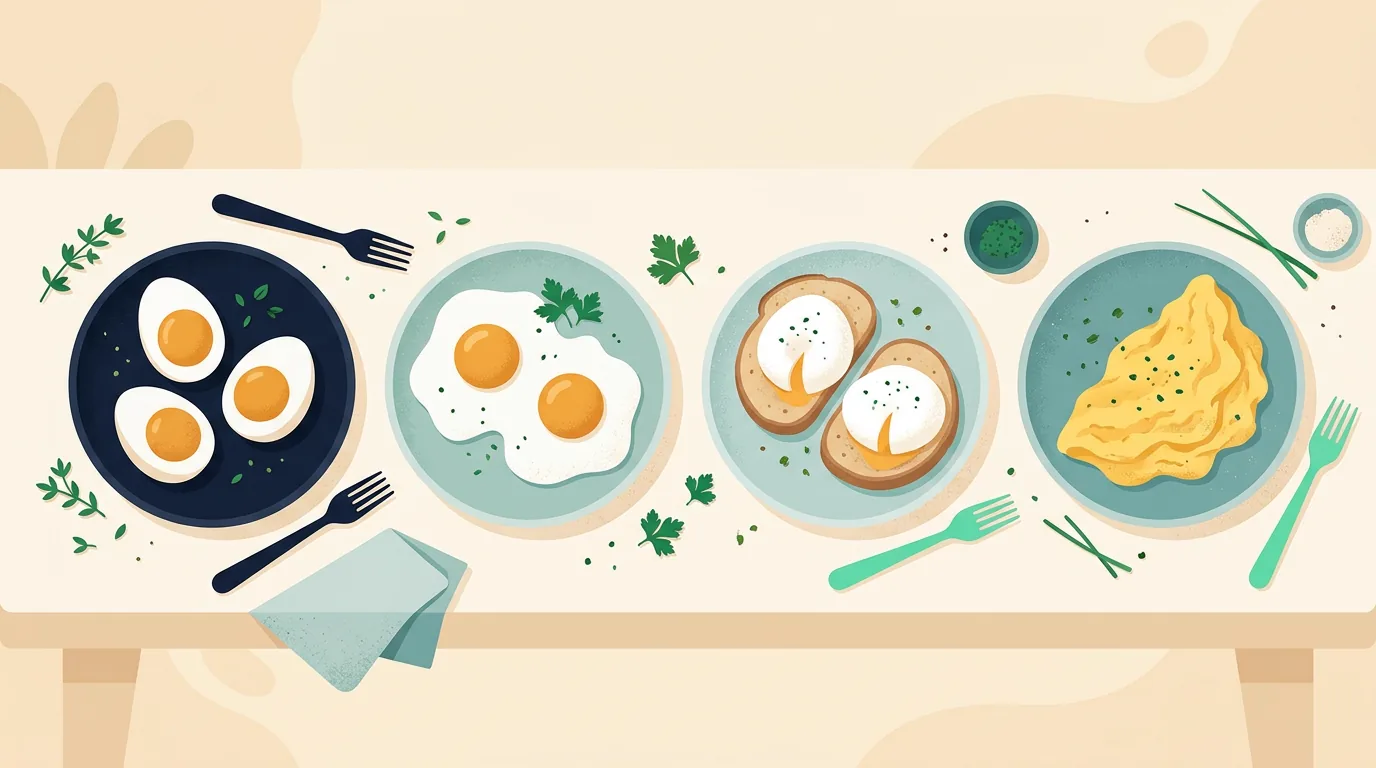
Here are 2 eggs calories by cooking method, using USDA records for two large eggs. Fried and scrambled numbers include the fat used in USDA’s test recipes, so yours may be higher or lower.
| Two large eggs | Calories | Protein | Fat |
|---|---|---|---|
| Raw or poached | 143 | 12.6 g | 9.5 g |
| Hard-boiled | 155 | 12.6 g | 10.6 g |
| Fried | 180 | 12.5 g | 13.6 g |
| Scrambled (with milk and fat) | 182 | 12.2 g | 13.4 g |
The NHS suggests cooking eggs without oil or butter: poach, boil or dry fry them in a non-stick pan. A teaspoon of butter or oil can quietly add more calories than you’d expect, so measure it if you’re counting.
Egg calorie calculator
Use this calculator to work out 2 eggs calories, or any number up to 12. Pick the size and how you cook them, and it shows the calories, protein and fat.
Pick how many eggs, their size and how you cook them. Nothing is saved or sent anywhere.
Protein in 2 eggs
Two large eggs have about 12.6 grams of protein, according to USDA FoodData Central. That’s about a quarter of the FDA’s Daily Value of 50 grams, the number used on nutrition labels.
The white and the yolk both carry protein. The yolk holds almost all of the fat: USDA lists raw egg yolk at 26.5 grams of fat per 100 grams, while raw egg white has less than 0.2 grams.
Vitamins and minerals in eggs
Eggs carry more than protein. Here is what two large raw eggs give you, compared with the FDA Daily Values on food labels.
| Nutrient in 2 large eggs | Amount | Share of Daily Value |
|---|---|---|
| Choline | 294 mg | About 53% (DV 550 mg) |
| Selenium | 30.7 mcg | About 56% (DV 55 mcg) |
| Vitamin B12 | 0.89 mcg | About 37% (DV 2.4 mcg) |
| Vitamin D | 2 mcg | About 10% (DV 20 mcg) |
| Saturated fat | 3.1 g | About 16% (DV 20 g) |
| Carbohydrate | 0.7 g | Almost none |
Choline helps your brain and liver work. A 2021 review in the journal Foods describes eggs as a major source of it.

Eggs and cholesterol
Two large eggs carry about 372 mg of cholesterol, according to USDA FoodData Central. That’s more than the FDA’s Daily Value of 300 mg for a whole day.
The research on what this means is mixed. A 2021 review in the journal Foods found that one egg a day didn’t change blood cholesterol in healthy adults eating a balanced diet in Japanese studies. But in one 4-week trial, about a third of people were “hyper-responders” whose cholesterol rose. Large studies across 50 countries found no clear link between moderate egg eating and heart disease, while one US study did find a link at higher intakes.
The same review notes that US dietary guidance still says to keep dietary cholesterol as low as possible within a healthy eating pattern. If you have high cholesterol, heart disease or diabetes, ask your doctor how many eggs fit your plan.
Are eggs good for weight loss?
With 2 eggs calories at about 143 to 182 and plenty of protein, eggs can make a filling breakfast. No single food causes weight loss, though. What matters is your total calories and the rest of your plate.
- Pair eggs with vegetables, whole-grain toast or fruit rather than bacon, sausage and buttered white toast.
- Boil or poach them, or use a non-stick pan with little or no added fat, as the NHS suggests.
- Count the extras: cheese, butter, cream and sauces often add more than the 2 eggs calories themselves.
For more filling, protein-rich ideas, see our guide to high protein meal prep.
Cook eggs safely
Raw and undercooked eggs can carry Salmonella germs. The CDC’s safer choice is eggs cooked until the yolks and whites are firm. Egg dishes like frittatas and quiches should reach 160°F (71°C), or 165°F (74°C) if they contain meat or poultry.
Take extra care with runny eggs for young children, older adults, people who are pregnant and anyone with a weakened immune system.
Frequently asked questions
How many calories are in 2 eggs?
Two large eggs have about 143 calories raw or poached, 155 hard-boiled, about 180 fried and about 182 scrambled with milk and fat, according to USDA FoodData Central. Smaller eggs have fewer calories and jumbo eggs more.
How much protein is in 2 eggs?
Two large eggs have about 12.6 grams of protein, according to USDA FoodData Central. That is about a quarter of the 50-gram Daily Value used on US food labels. Both the white and the yolk contain protein.
Is 2 eggs a day too much?
For many healthy adults, studies of moderate egg eating show no clear harm, but two large eggs carry about 372 mg of cholesterol, more than the FDA Daily Value of 300 mg. If you have high cholesterol, heart disease or diabetes, ask your doctor what fits your plan.
How many calories are in 2 boiled eggs?
Two large hard-boiled eggs have about 155 calories, 12.6 grams of protein and 10.6 grams of fat, according to USDA FoodData Central. Boiling adds no fat, so it is one of the lowest-calorie ways to cook eggs.
How many calories are in 2 scrambled eggs?
For 2 scrambled eggs, calories come to about 182 when two large eggs are scrambled with milk and fat, according to USDA FoodData Central. Scrambling with no milk in a non-stick pan with no added fat keeps the calories close to the raw-egg figure of about 143.
Are eggs OK for losing weight?
Eggs can fit a weight loss plan because two large eggs give about 12.6 grams of protein for around 143 to 182 calories. No single food causes weight loss; your total calories and the rest of your meal matter more.
Does the yolk have more calories than the white?
Yes. USDA lists raw egg yolk at 322 calories per 100 grams and raw egg white at about 52, because the yolk holds almost all of the fat. The white is mostly protein and water.
The bottom line
2 eggs calories depend mostly on size and cooking: about 143 for two large eggs raw or poached, 155 boiled and around 180 fried or scrambled. They give you about 12.6 grams of protein and useful choline, selenium and vitamin B12. Their cholesterol is high, so if you have high cholesterol, heart disease or diabetes, ask your doctor how many eggs suit you.
Related reading
- High protein meal prep: easy ideas
- Burning 1000 calories a day: is it safe?
- Healthy fast food options
Sources
- USDA FoodData Central: Egg, whole, raw, fresh (SR Legacy 171287)
- USDA FoodData Central: Egg, whole, cooked, hard-boiled (SR Legacy 173424)
- USDA FoodData Central: Egg, whole, cooked, fried (SR Legacy 173423)
- USDA FoodData Central: Egg, whole, cooked, scrambled (SR Legacy 172187)
- USDA FoodData Central: Egg, white, raw, fresh (SR Legacy 172183)
- USDA FoodData Central: Egg, yolk, raw, fresh (SR Legacy 172184)
- FDA: Daily Value on the Nutrition and Supplement Facts Labels
- Sugano M, Matsuoka R. Nutritional viewpoints on eggs and cholesterol. Foods, 2021
- NHS: How to eat less saturated fat
- CDC: Safer Food Choices for Children Under 5 Years Old