
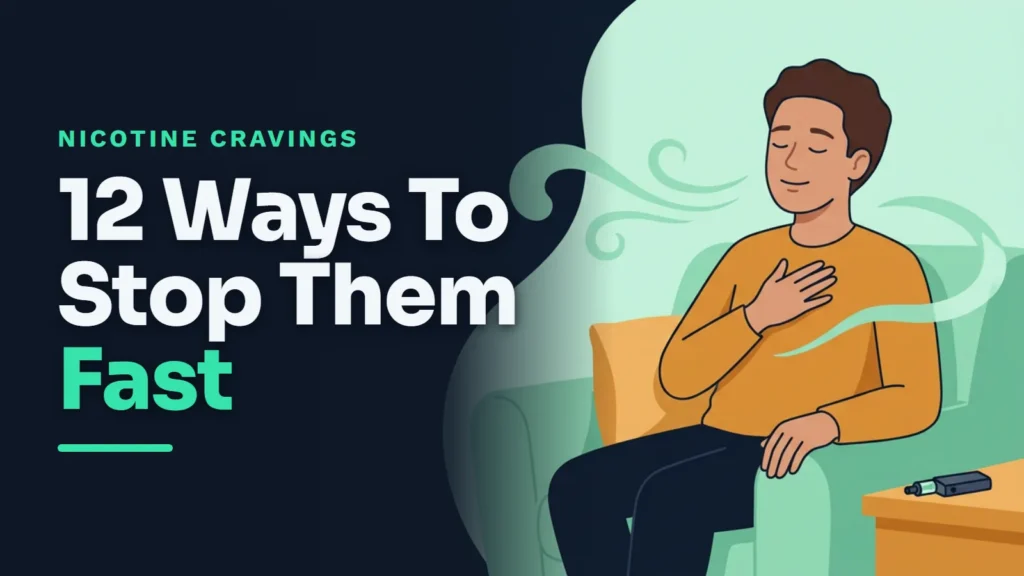
You’re doing well. Then, out of nowhere, the thought arrives: just one hit. Your chest feels tight, your focus disappears, and it seems like the feeling will never stop. That is a nicotine craving, and when you’re quitting vaping, you’ll meet a lot of them.
Here’s the good news, straight from the CDC: you never have to give in to a craving, and it will always pass. This guide explains why nicotine cravings happen, how long they last, and 12 practical ways to get through them, drawn from CDC and WHO advice.
Key takeaways
- A single nicotine craving usually starts to fade within a few minutes (CDC).
- Later cravings can be set off by triggers like coffee, driving or friends (CDC).
- The fastest fixes: slow breathing, a short walk, water, and keeping your hands and mouth busy.
Breathing, quick swaps and your reason, on one card for the moment a craving hits.Download the PDF
This guide is part of our series on quitting. If you are just starting out, begin with how to quit vaping: a simple 5-step guide.
Why nicotine cravings happen when you quit vaping
Vapes deliver nicotine, and nicotine is addictive. When you stop, your body notices. The CDC says quitting vaping is likely similar to quitting smoking, because both involve nicotine addiction and quitting may lead to withdrawal symptoms.
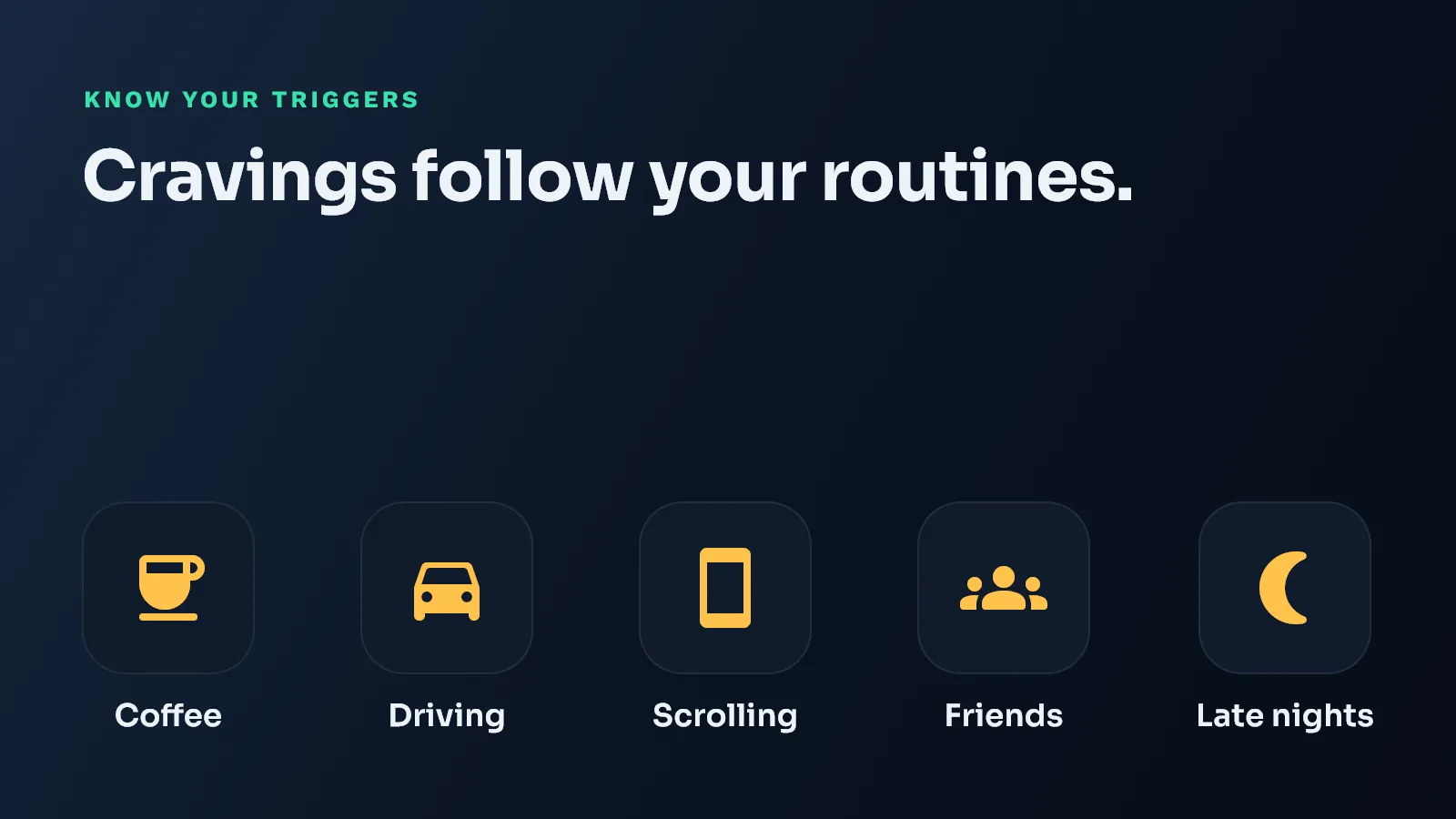
But cravings aren’t only chemical. Your brain has linked vaping to everyday moments. The CDC explains that cravings can be triggered by people you used with, places where you used to vape, and routines like having a coffee. Even a thought or a feeling can set one off.
That’s why nicotine cravings can hit months after you quit, the first time you’re back at a party or stuck in traffic. It’s not a sign you’re failing. It’s an old habit loop firing.
See what quitting vaping puts back in your pocket.
How long do nicotine cravings last?
A single nicotine craving usually lasts just a few minutes. The CDC says that for most people, the urge begins to dissolve after a few minutes, especially if you distract yourself. You will get more urges in the first weeks after quitting, but the CDC says they weaken with time.
Each individual craving rises, peaks and fades. The CDC’s advice is simple: ride the wave, and remember it will always pass.
Over the bigger picture, the WHO says you’ll likely have withdrawal symptoms in the first few weeks after quitting, and that they’re temporary. Common ones include headaches, tiredness, trouble concentrating, a bigger appetite and feeling irritable or restless.
After that early stretch, most cravings come from triggers rather than withdrawal. Having a plan ready for those moments is what makes them manageable.
Do nicotine cravings ever go away?
Yes, for most people they fade a lot. The CDC says urges weaken with time, and that withdrawal symptoms fade as long as you stay smokefree.
What usually lingers is the odd trigger craving. You might feel one at a wedding, on a long drive or after a stressful day, even months later. The CDC says people, places and routines you linked with vaping can trigger cravings, and that a craving will always pass.
| When | What CDC and WHO say | Source |
|---|---|---|
| First few weeks | Withdrawal symptoms are most likely, and they are temporary. Avoid tempting situations where you can. | WHO, CDC |
| As time passes | You will get more urges, but they weaken with time. Withdrawal symptoms fade as long as you stay nicotine-free. | CDC |
| Any time | People, places, routines, or even a thought or feeling can still trigger a craving. It will always pass. | CDC |
Neither the CDC nor the WHO gives a fixed day-by-day timeline for cravings. Everyone is different.
12 ways to stop nicotine cravings in the moment
1. Learn your triggers
For a few days, note when cravings hit: the time, where you were and how you felt. Patterns show up fast. Maybe it’s the first coffee, the drive home, or scrolling in bed. Once you know your top three, you can plan for them.
2. Change the routine around your biggest trigger
If coffee and a vape went together, change the coffee: a new mug, a different seat, tea instead. The CDC suggests avoiding situations where you’ll be tempted during the first few weeks. You don’t have to avoid them forever, just while the habit is fresh.
3. Clear out every vape, pod and charger
The CDC recommends making your environment work for you by removing anything linked to the habit. Check the car, your bag, jacket pockets and the back of the drawer. “Just in case” spares are what turn a craving into a slip.
4. Ride the wave
Instead of fighting nicotine cravings or giving in, notice it like a wave: it builds, peaks and falls. Name it out loud if it helps: “This is a craving. It will pass.” The CDC calls this riding the waves.
5. Breathe slowly through the peak
Slow breathing gives your hands and mind a job while nicotine cravings peak. Try breathing in for four counts, holding for two, and breathing out for six. Repeat until the urge drops. The CDC suggests reframing “I deserve a vape” as “I deserve a break to breathe and relax.”
6. Move your body
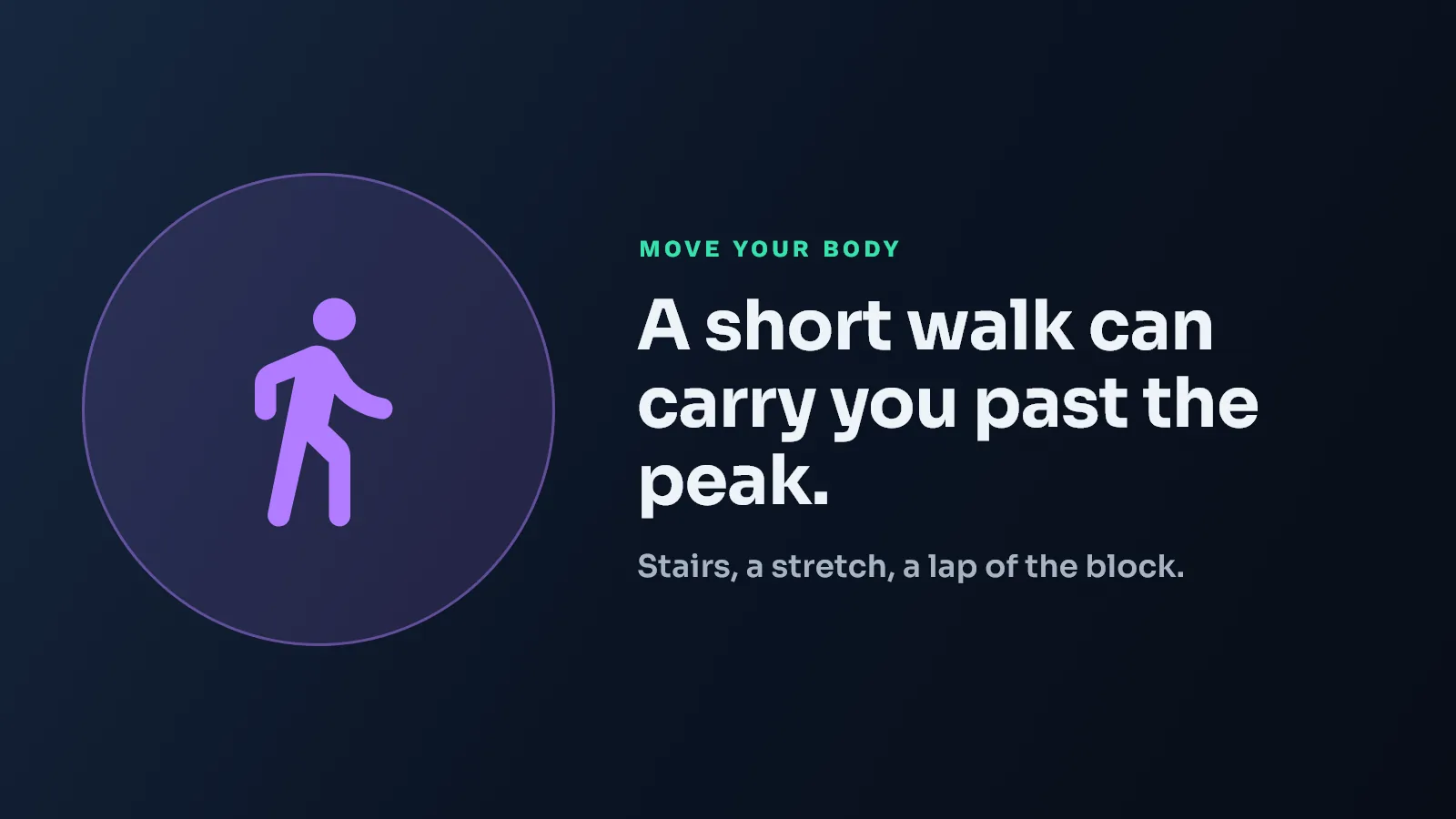
The CDC says to be active, and that some physical activity is better than none. The WHO suggests light exercise like brisk walking. Even a lap of the block, a flight of stairs or a few stretches can carry you past the peak of nicotine cravings.
7. Sip water
The WHO suggests sipping warm water to help with withdrawal. It can take the edge off nicotine cravings, and keeping a bottle within reach also covers the hand-to-mouth ritual that vaping used to fill.
8. Keep your hands and mouth busy
The CDC lists safe substitutes such as toothpicks, straws, cinnamon sticks and stress balls. Sugar-free gum and a fidget toy help many people with nicotine cravings too. Keep one where your vape used to live.
9. Talk back to the urge
Cravings come with persuasive thoughts: “Just one won’t hurt.” “You’ve earned it.” The CDC suggests listening to what the urge says, then talking back. Try: “One leads to the next. I’ve already done the hard part.”
10. Remember your why
The CDC notes that remembering why you’re quitting can help when nicotine cravings hit. Write your reason down, or record a short voice note to yourself on a good day. Hearing your own voice at 11pm is surprisingly powerful.
11. Look after the basics
The WHO recommends getting enough sleep, eating small regular meals to keep your energy steady, and doing light exercise. Cravings hit harder when you’re tired, hungry or stressed, so these small things carry a lot of weight.
12. Get support, and consider medication
Tell the people around you that you’re quitting, and call a friend when nicotine cravings hit. The CDC recommends making a quit plan and talking to a healthcare provider, who may suggest medication to help with withdrawal and cravings. It notes that adults who smoke have the best chance of quitting for good when they use medication and counselling together.
In the US, free quit coaching is available at 1-800-QUIT-NOW. Elsewhere, search for your country’s free quitline.
Foods that help with nicotine cravings
No food can “kill” nicotine cravings. But the right snack can keep your hands and mouth busy while a craving passes, and stop hunger from making it feel worse.
- Crunchy, low-calorie snacks. The CDC suggests celery, carrots or sugar-free mints when quitting makes you hungrier.
- Cinnamon sticks. The CDC lists them as a mouth substitute you can chew on or hold.
- Water and warm drinks. The WHO suggests sipping warm water. A different drink can also break the coffee-and-vape link.
- Small, regular meals. The WHO recommends them to keep your energy steady, because hunger can feel a lot like a craving.
If coffee or alcohol was part of your vaping routine, be extra careful with them for the first few weeks. Change where and how you have them, or switch them for something else for a while.
What if you slip?
A slip doesn’t erase your progress. Every day you went without vaping still happened. Look at what set it off, decide what you’ll do differently next time, and start again straight away, not “on Monday”.
A tool for the moment a craving hits
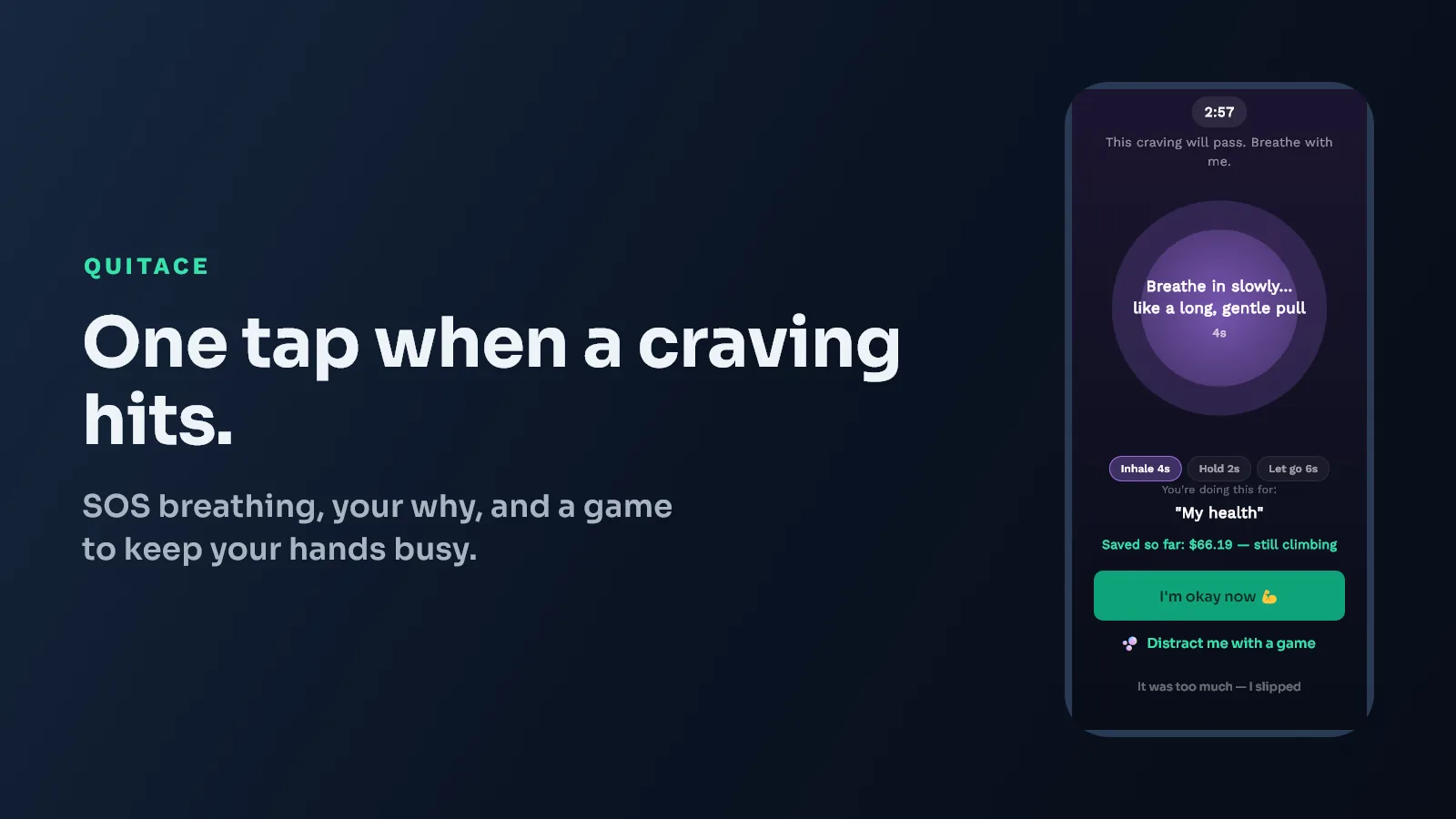
It helps to have a plan in your pocket. QuitAce is a free app that gives you one-tap SOS breathing for cravings, a craving log that shows your triggers over time, a short game to keep your hands busy, and your own recorded reason to quit. It tracks your days and the money you’re saving, and your data stays on your phone. Try QuitAce on Google Play.
Frequently asked questions
How long do vape cravings last?
Each craving rises, peaks and passes. The CDC says a craving will always pass. Withdrawal symptoms are most likely in the first few weeks after quitting, and the WHO says they’re temporary.
Why do I still get vape cravings months after quitting?
Cravings can be triggered by people, places and routines you linked with vaping, or even a thought or a feeling (CDC). A late craving is an old habit loop, not a failure.
What helps a vape craving quickly?
Ride the wave, breathe slowly, move your body, sip water, and keep your hands busy. Most people find one or two that work best for them.
Can medication help with vape cravings?
It can. The CDC recommends talking to a healthcare provider, who may suggest medication to help with withdrawal and cravings.
Do nicotine cravings ever go away?
They fade a lot for most people. The CDC says urges weaken with time and withdrawal symptoms fade as long as you stay nicotine-free. An occasional trigger craving can still pop up months later, and it passes too.
What foods help with nicotine cravings?
No food stops cravings, but crunchy low-calorie snacks like celery and carrots, sugar-free mints and cinnamon sticks keep your mouth busy (CDC). Sipping water and eating small regular meals also help (WHO).
The bottom line
Nicotine cravings are normal, temporary and beatable. Learn your triggers, have a plan ready for the moment one hits, and remember that every craving you outlast is proof you can do it again.
Next, see our guide to vaping withdrawal symptoms, and if weight is on your mind, whether vaping has calories.
This article is for general information and isn’t medical advice. If you’re pregnant, have a health condition or take medication, talk to a doctor or pharmacist about the best way to quit.
Related reading
- How to quit vaping: a simple 5-step guide
- Vaping withdrawal symptoms: 7 signs and what helps
- Does vaping have calories? 7 facts, 1 honest estimate
[…] We list 12 more ideas in nicotine cravings after quitting vaping. […]
[…] cravings are what is pushing you back, our guide to nicotine cravings after quitting vaping has 12 practical ways to ride them […]
[…] smoking (our guide to nicotine cravings after quitting vaping may […]
[…] Struggling? See our guide on nicotine cravings. […]