

A weight loss plateau can feel unfair. You’re still eating well and moving more, but the scale hasn’t budged in weeks. It’s one of the most common reasons people give up.
The good news: a plateau is normal, and it doesn’t mean your body is broken. Here’s what research says causes it, how to tell if yours is real, and what to try next.
Key takeaways
- Weight loss often stalls around 6 to 8 months, and research points mainly to rising appetite and eating that creeps back up, not a broken metabolism.
- One study found appetite rose by about 100 calories a day for every kilogram (2.2 lb) of weight lost.
- To restart, check your portions, add activity, aim for 7 or more hours of sleep, and ask a doctor if a medicine or health problem could play a part.
What is a weight loss plateau?
A weight loss plateau is a stretch of several weeks when your weight stops going down, even though you think you’re doing the same things. In research, many people hit one about 6 to 8 months into a diet. It’s common, it isn’t a failure, and small changes can often get things moving again.
Why weight loss stalls
There’s rarely one cause. Here are the 7 reasons with the best evidence behind them.

Your appetite pushes back
As you lose weight, your body nudges you to eat more. A 2016 study in the journal Obesity, which included NIH scientist Kevin Hall, measured this in adults with type 2 diabetes. Appetite rose by about 100 calories a day for every kilogram (2.2 lb) lost.
That push was more than 3 times bigger than the drop in calories the body burns. You may not feel it as hunger. It can show up as slightly bigger portions or one extra snack.
Small slips add up
A 2014 study in the American Journal of Clinical Nutrition used math models to ask why weight loss so often stops at about 6 months. The answer wasn’t a slowing metabolism. It was small, on-and-off breaks from the diet.
The model showed a 6-month plateau can happen even when people stick to their plan most of the time. A weekend here and a party there, and the calorie gap shrinks.
A smaller body burns less
A lighter body needs fewer calories to run. In people with obesity who lose 10% to 20% of their weight, the body burns about 30 fewer calories a day for each kilogram (2.2 lb) lost, the 2016 study notes. So the eating plan that worked at your starting weight may only hold your weight steady now.
The math was never a straight line
Many apps still use the rule that cutting 3,500 calories loses 1 pound (0.45 kg). A 2012 review in the same journal called using that rule to predict weight loss over time a fundamental error.
Its rule of thumb: each lasting 100-calorie cut a day leads, at best, to about 10 pounds (4.5 kg) of eventual loss, and about half of it comes in the first year. So weight loss naturally slows as you go. A slowdown isn’t always a weight loss plateau.
Short sleep
The NIDDK, part of the NIH, says not getting enough sleep is linked to weight gain and may make you hungrier and eat more. The CDC recommends 7 or more hours a night for adults aged 18 to 60.
Stress and health problems
The NIDDK lists long-term stress as a health problem that may add to weight gain. It also names some hormone conditions, such as polycystic ovary syndrome (PCOS), Cushing’s syndrome and an underactive thyroid (hypothyroidism).
Some medicines
The NIDDK says some medicines can lead to weight gain, including:
- some medicines for epilepsy, depression or psychotic disorders
- corticosteroids (steroids)
- some diabetes medicines, such as insulin and sulfonylureas
- some blood pressure medicines, such as beta-blockers
- some antihistamines for allergies
Never stop a medicine on your own. Ask your doctor if yours could be a factor.
Is it really a plateau?
Before you change anything, make sure the scale is telling the whole story.
- Weigh yourself at the same time of day, on the same scale, in similar clothes.
- Look at the trend over several weeks, not day to day.
- Notice other wins: how your clothes fit, your energy, your fitness.
- Remember how far you’ve come. The CDC says even a 5% weight loss, such as 10 pounds (4.5 kg) for a 200-pound (91 kg) person, can improve blood pressure, cholesterol and blood sugar.
Weight loss plateau checklist
Go down the list and pick one or two things to change. Changing everything at once makes it hard to tell what worked.

| Check | What to look for | What to try |
|---|---|---|
| Portions | Plates and snacks slowly getting bigger | Measure or log what you eat for a week or two |
| Weekends and events | Big gaps between weekdays and weekends | Plan one or two treat meals instead of whole days |
| Drinks | Juice, soda, coffee drinks and alcohol | Swap sugary drinks for water most of the time |
| Activity | Fewer steps or workouts than when you started | Add a 10-minute walk a day or another short session |
| Strength | No muscle-strengthening work | Add it on 2 days a week, as the CDC recommends |
| Sleep | Fewer than 7 hours most nights | Keep a regular bedtime and wake time |
| Stress | Long stretches of stress or stress eating | Try a short walk, a call with a friend or a relaxation routine |
| Medicines and health | A new medicine, or a condition from the list above | Talk to your doctor; don’t stop medicines on your own |
How to break a weight loss plateau
Recheck your needs at your new weight
Your calorie needs drop as your weight drops. The free Body Weight Planner from the NIDDK estimates how much to eat and how changes in activity affect your needs. Run it again with your current weight.
Move a little more
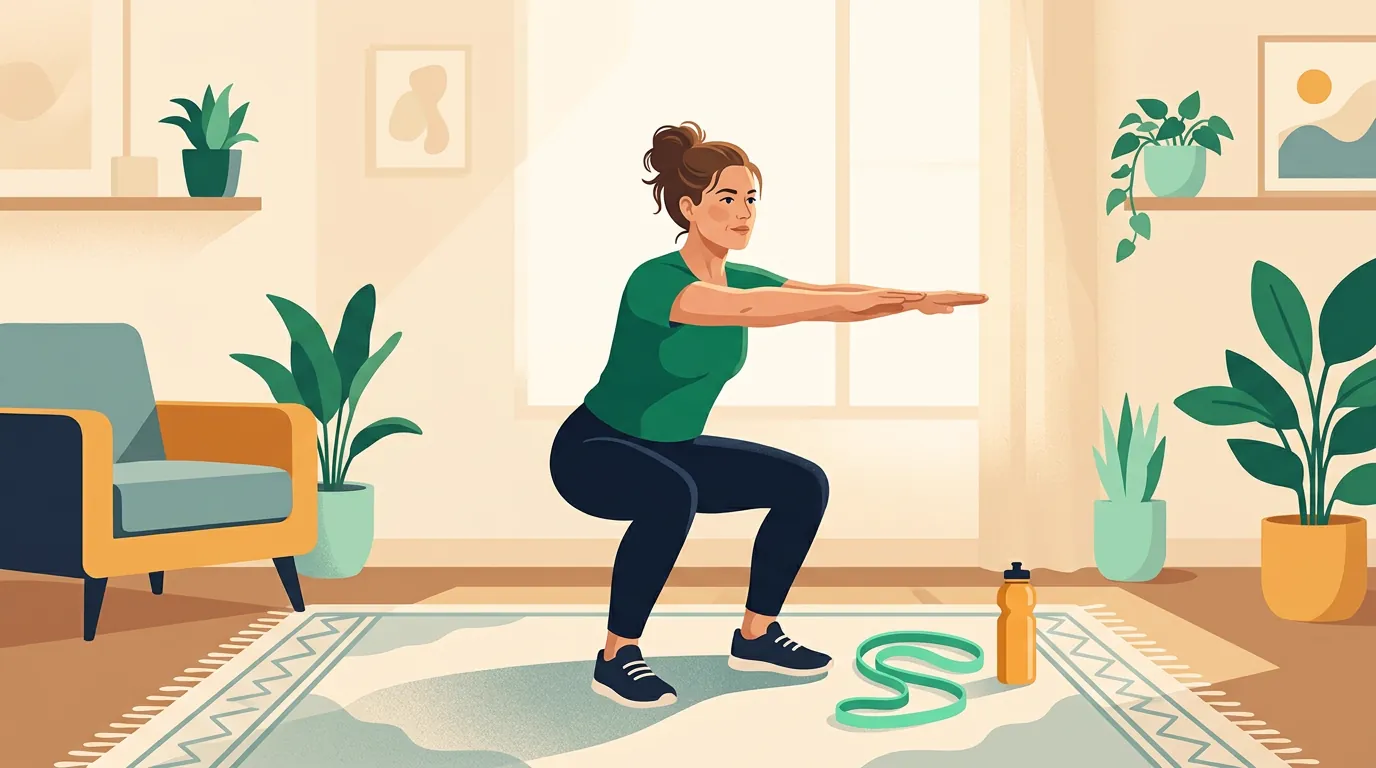
The CDC says losing weight takes a high amount of activity unless you also change your diet. Some people need more than 150 minutes a week just to keep weight off. A 10-minute walk after dinner is an easy start. Our guide to how many steps a day to lose weight has a simple 4-week walking plan and a calculator.
Keep your muscle
The CDC recommends muscle-strengthening activity on at least 2 days a week. You can use weights, resistance bands or your own body weight.
Protect your sleep
Aim for 7 or more hours a night. A regular bedtime and wake time, even on weekends, makes that easier.
Plan for the push-back
The authors of the 2016 study say the body’s control of appetite helps explain why keeping weight off is so hard. The NHS suggests getting your 5 A Day of fruit and vegetables, not skipping meals, and not keeping unhealthy snacks in the house.
Skip the crash diet
Cutting calories hard can backfire. The NHS advises against losing weight suddenly with diets and suggests aiming to lose 0.5 to 1 kg (1 to 2 lb) a week. The CDC says people who lose about 1 to 2 pounds a week are more likely to keep it off.
If you’re pregnant, breastfeeding, have a health condition or take medicines, check with your doctor or a dietitian before you change your diet.
When holding steady is a win
Sometimes a weight loss plateau is your body settling at a new, lower weight. In one weight-loss program described in the 2016 study, people were eating close to their old amounts again after a year. Yet they were still about 5 kg (11 lb) lighter. Keeping weight off while your appetite pushes back is a real success.
When to see a doctor
See a doctor if:
- you’ve been stuck for months despite steady changes and want help
- you’re gaining weight without a clear reason
- you started a new medicine and your weight changed
- you have other new symptoms along with weight changes
- you’re thinking about weight-loss medicines or surgery
A doctor can check for health conditions and medicines that affect weight, and can refer you to a dietitian.
Frequently asked questions
How long does a weight loss plateau last?
There’s no set length, and studies haven’t defined one. In weight-loss research, many people reach a plateau about 6 to 8 months into a diet. If your weight hasn’t moved for several weeks, go through the checklist above and try one change at a time.
Why am I not losing weight in a calorie deficit?
Your deficit may be smaller than you think. As you lose weight, your body burns fewer calories, and research shows appetite rises by about 100 calories a day for each kilogram (2.2 lb) lost. Small, on-and-off slips add up too. Track honestly for a week or two and recheck your needs at your current weight.
Is a weight loss plateau caused by a slow metabolism?
Mostly not. A 2014 modeling study found that small breaks from the diet, not a slowing metabolism, were a major cause of the common 6-month plateau. Your body does burn fewer calories as you get lighter. But a 2016 study found the rise in appetite is more than 3 times bigger.
Should I eat less to break a plateau?
Not by crash dieting. The NHS advises against losing weight suddenly with diets and suggests aiming for 0.5 to 1 kg (1 to 2 lb) a week. Try a small change first, like trimming portions or moving more. If you’re pregnant, have a health condition or take medicines, talk to a doctor first.
Can lack of sleep stop weight loss?
It can make weight loss harder. The NIDDK says not getting enough sleep is linked to weight gain and may make you hungrier and eat more calories. The CDC recommends 7 or more hours of sleep a night for adults aged 18 to 60.
Is it normal to stop losing weight after 6 months?
Yes, it’s very common. Researchers note that weight loss on a diet typically levels off at about 6 months. Keeping off the weight you’ve lost is a real success. If you want to lose more, review your eating, activity and sleep, and talk to your doctor about other options.
The bottom line
A weight loss plateau is normal, and it’s usually about appetite and small slips, not a broken metabolism. Check your portions, move a little more, protect your sleep and ask your doctor about medicines or health problems. Holding on to the weight you’ve lost is a win in itself.
Related reading
- How many steps a day to lose weight
- Burning 1000 calories a day: is it safe?
- Intermittent fasting for women over 40
- Body recomposition for women
Sources
- CDC: Steps for Losing Weight
- CDC: Physical Activity and Your Weight and Health (7 Apr 2026)
- CDC: Adult Activity: An Overview
- CDC: About Sleep
- NIDDK (NIH): Factors Affecting Weight & Health
- NIDDK (NIH): Body Weight Planner
- NHS: Tips to help you lose weight
- Thomas DM, et al. Effect of dietary adherence on the body weight plateau. Am J Clin Nutr, 2014
- Polidori D, et al. How strongly does appetite counter weight loss? Obesity, 2016
- Hall KD, et al. Energy balance and its components. Am J Clin Nutr, 2012