

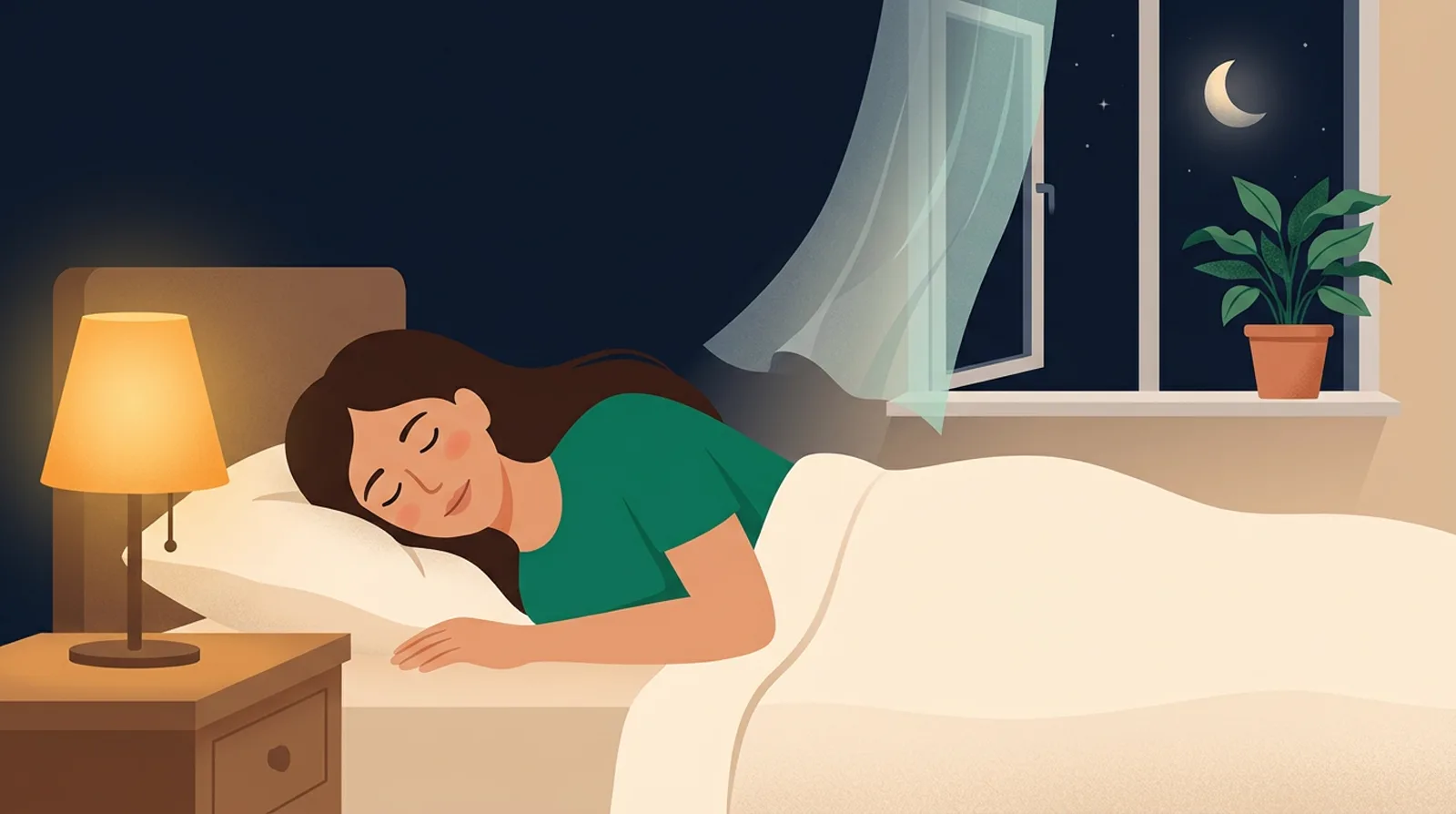
You toss, you kick off the covers, you pull them back on. A room that’s too hot or too cold can wreck a good night’s sleep. So what is the best temperature for sleep, and how do you get your bedroom there?
This guide gives you a simple answer, explains why a cool room helps, and shows what research says for adults, older adults and babies. You’ll also find a quick bedroom checker and 7 easy ways to cool down.
Key takeaways
- The CDC lists keeping your bedroom at a cool temperature as one of its tips for better sleep.
- In a 2012 research review, heat broke up sleep more than cool air did when people used normal bedding.
- The NHS advises a baby’s room of 16 to 20°C (61 to 68°F), because overheating can raise the risk of SIDS.
Best temperature for sleep
There’s no single perfect number. For most adults, the best temperature for sleep is a cool room. The CDC advises a cool bedroom. Research found sleep held up across 55 to 73°F (13 to 23°C) with normal bedding, while heat made people wake more. The middle of that range, about 64°F (18°C), is a good place to start. Adults over 65 may sleep best a little warmer.
Why a cool room helps
To understand the best temperature for sleep, start with your body. Its temperature drops a little as you fall asleep. A cool room makes that drop easier. A hot room fights it.
A 2012 research review found that both heat and cold can cause more waking and less deep sleep and REM (dream) sleep. But in real life, with blankets and pajamas, heat was the bigger problem. It made people wake more and cut their deep sleep. Cold air did not change sleep stages when people had enough bedding.
Humidity matters too. Sticky, humid heat stops sweat from drying, so you stay hot and wake more, the same review says. The space under your covers also has its own climate. It was usually about 32 to 34°C (90 to 93°F) with 40 to 60% humidity when people slept well.
Check your bedroom
Type in your bedroom temperature at bedtime to see how it compares with the best temperature for sleep that research and the NHS describe.
Type your bedroom temperature at bedtime. Nothing is saved or sent anywhere.
Bedroom temperature by age
The best temperature for sleep is not the same for everyone. Here’s what the sources we checked say:
| Who | Temperature for sleep | Source |
|---|---|---|
| Most adults | Cool. Sleep held up from 55 to 73°F (13 to 23°C) with normal bedding | CDC tips and a 2012 research review |
| Adults 65 and over | Best sleep at 68 to 77°F (20 to 25°C) | A 2023 study of older adults |
| Babies | 61 to 68°F (16 to 20°C) | NHS |
The 2023 study tracked older adults sleeping at home. Their sleep was most efficient and restful between 68 and 77°F (20 and 25°C). It dropped by 5 to 10% when the room went from 77 to 86°F (25 to 30°C). The best number also differed a lot from person to person.
For babies, the NHS says to keep the room between 16 and 20°C (61 to 68°F) and check it with a room thermometer. Overheating can increase the risk of SIDS. Too many blankets or clothes can also make a baby overheat.
7 ways to stay cool at night
You don’t need air conditioning to sleep better on hot nights. Try these:
1. Block the day’s heat
The NHS says to close windows, curtains and blinds during the day, then open them at night once it’s cooler outside.
2. Use a fan
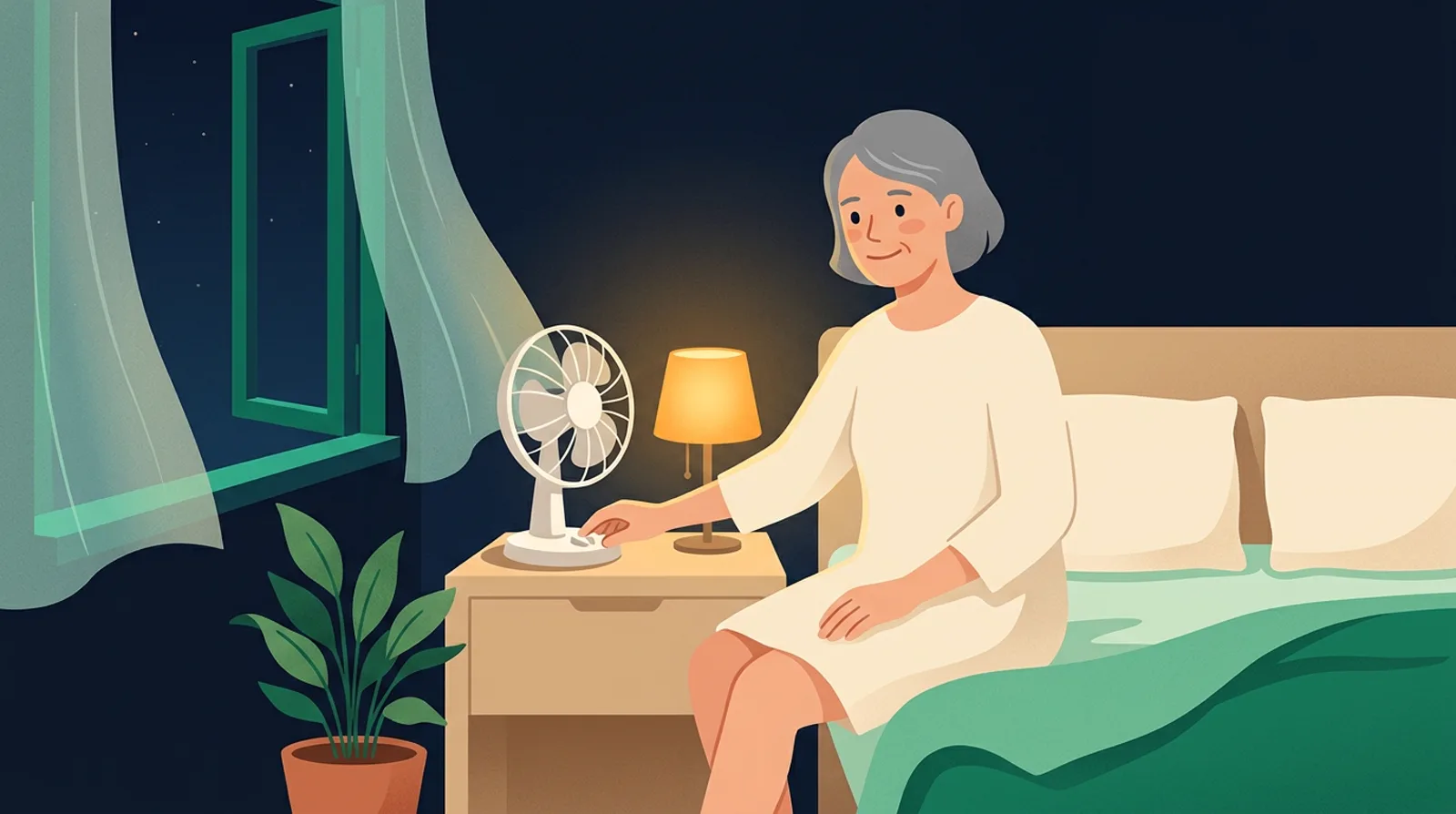
The NHS says electric fans can help when the temperature is below 35°C (95°F). Point it so the air moves across your bed.
3. Choose light bedding
Swap a heavy duvet for a light cotton sheet on warm nights. Keep a light blanket close in case you get cold before morning.
4. Take a warm shower 1 to 2 hours before bed
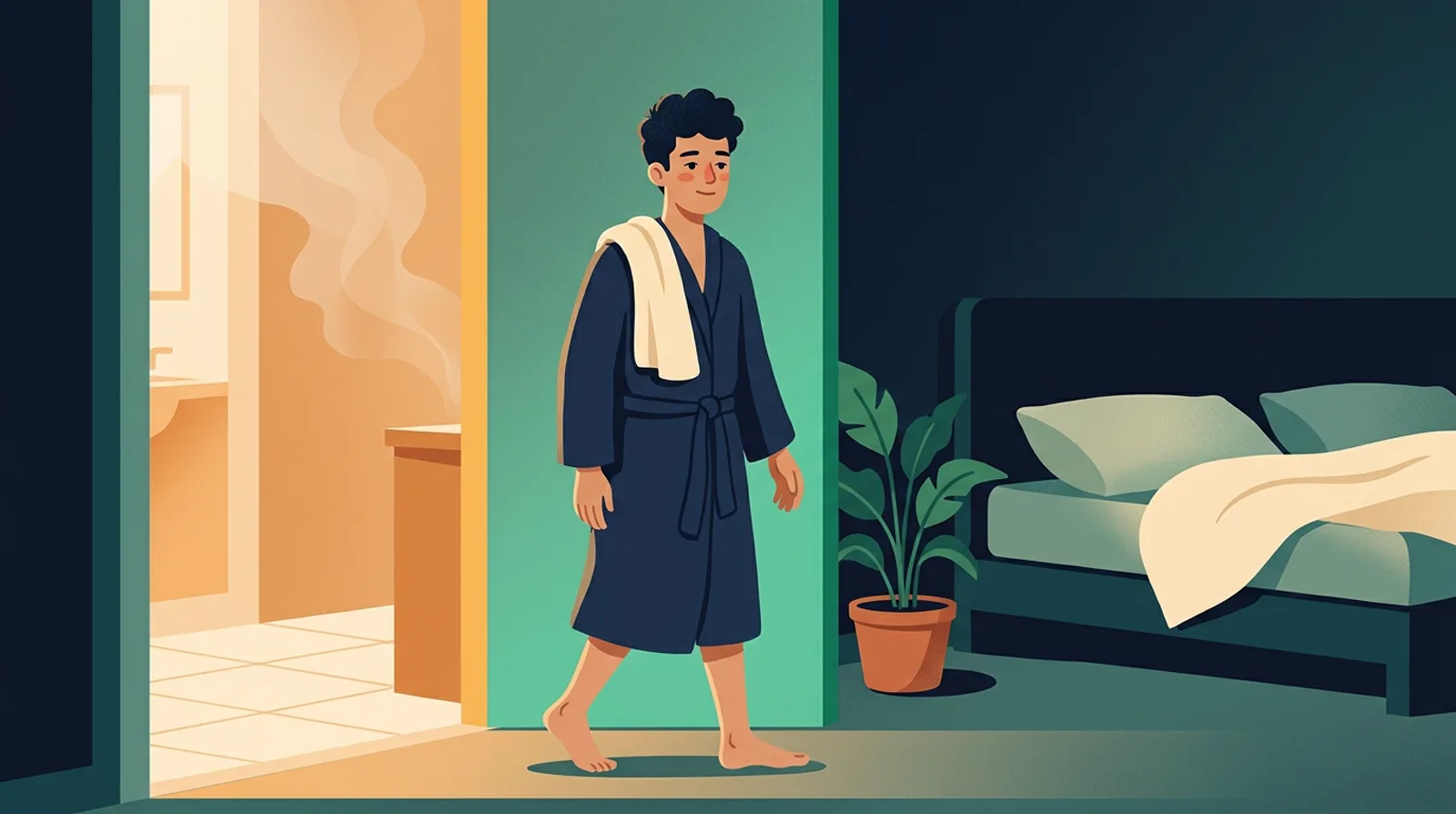
It sounds odd, but it works for many people. A 2019 review found that a warm shower or bath of 104 to 108.5°F (40 to 42.5°C), taken 1 to 2 hours before bed, helped people fall asleep faster. Even 10 minutes helped. Warming your skin helps your body shed heat afterward.
5. Drink water, skip alcohol
The NHS advises drinking extra fluids in hot weather but avoiding alcohol, caffeine and hot drinks. The CDC also suggests avoiding caffeine in the afternoon or evening.
6. Keep a steady routine
The CDC says to go to bed and get up at the same time every day, and to turn off screens at least 30 minutes before bed.
7. Warm up wisely in winter
Cold air with good bedding is fine for sleep. But the 2012 review notes that cold can still affect the heart during sleep, so very cold bedrooms are not ideal, especially for older people. Use warm layers rather than piling on so many blankets that you overheat.
How much sleep you need
A good temperature helps, but so does enough time in bed. The CDC says adults aged 18 to 60 need at least 7 hours a night. Adults 61 to 64 need 7 to 9 hours, and adults 65 and over need 7 to 8 hours.
Waking up at night a lot? Our guide on what core sleep is explains the stages of sleep, and our nervous system reset techniques can help you wind down.
When to see a doctor
See a doctor if you still sleep badly most nights for a few weeks, even with a cool, comfortable room. Also see one if you often wake up soaked in sweat, snore loudly, stop breathing for moments in your sleep, or feel very sleepy in the day.
In a heatwave, the NHS says older people over 65, babies and young children, and people who live alone are most at risk. Check on them, and get urgent help for anyone who is confused, very hot and not sweating, or collapses. Call 911 or your local emergency number.
Frequently asked questions
What is the best temperature for your body to sleep in?
For most adults, a cool room works best. A research review found sleep held up from 55 to 73°F (13 to 23°C) with normal bedding, while heat made people wake more, so about 64°F (18°C) is a good start. Older adults may sleep best a little warmer, around 68 to 77°F (20 to 25°C).
Is it safe to sleep with a fan on?
For most people, yes. The NHS says electric fans can help keep you cool when the temperature is below 35°C (95°F). Keep it clean and stable, and point it across the bed rather than right at your face if dry eyes or a dry throat bother you.
Does drinking water help you sleep?
Drinking enough water helps you cope with heat, and the NHS advises extra fluids in hot weather. But a big drink right before bed can wake you up to use the toilet. Sip through the day and evening instead. Avoid alcohol and caffeine late in the day.
Is 72 degrees too hot to sleep?
Not for everyone. 72°F (22°C) sits inside the range where sleep held up in research with normal bedding, and inside the best range for adults over 65 in a 2023 study. If you wake up hot, try lighter bedding or a fan before changing the thermostat.
Is it better to sleep in a cold or warm room?
A cool room is usually better. A research review found that, with blankets and pajamas, heat caused more waking and less deep sleep, while cool air did not change sleep stages. Very cold rooms are still not ideal, especially for older people, so use warm bedding.
What temperature should a baby’s room be?
The NHS advises keeping a baby’s room between 16 and 20°C (61 to 68°F) and checking it with a room thermometer. Overheating can increase the risk of SIDS, so avoid too many layers or blankets. Ask your doctor or health visitor if you’re unsure.
Why do I wake up hot at night?
A warm or humid room, heavy bedding, alcohol or a late heavy meal can all make you wake up hot. Hormone changes like menopause can cause night sweats too. If you often wake up soaked in sweat for no clear reason, see a doctor.
The bottom line
The best temperature for sleep is a cool room that suits you, about 64°F (18°C) as a starting point for adults, a bit warmer for adults over 65, and 61 to 68°F (16 to 20°C) for babies. Heat breaks up sleep more than cool air does. Block the day’s heat, use a fan and light bedding, and keep a steady routine.
Related reading
Sources
- CDC: About Sleep (15 May 2024)
- NHS: Heatwave: how to cope in hot weather (reviewed 12 Jun 2026)
- NHS: Reduce the risk of sudden infant death syndrome (reviewed 25 Nov 2025)
- Okamoto-Mizuno K, Mizuno K. Effects of thermal environment on sleep and circadian rhythm. J Physiol Anthropol, 2012
- Baniassadi A, et al. Nighttime ambient temperature and sleep in community-dwelling older adults. Sci Total Environ, 2023
- Haghayegh S, et al. Before-bedtime passive body heating by warm shower or bath to improve sleep. Sleep Med Rev, 2019