


A calorie deficit calculator tells you roughly how much to eat each day to lose weight at a steady pace. You eat a bit less than your body burns, and over weeks your body uses stored fat to make up the gap.
This guide gives you a free calculator, shows worked examples, and explains why the numbers are only a starting point. It also covers the pace the CDC links with keeping weight off.
Key takeaways
- The CDC says people who lose about 1 to 2 pounds a week are more likely to keep the weight off.
- The old “3,500 calories per pound” rule is a rough guide; an NIH researcher showed it does not fit everyone.
- Your body burns less as you get lighter, so weight loss usually slows even if you eat the same.
What a calorie deficit calculator does
A calorie deficit calculator first estimates how many calories you burn in a day. Then it takes away a daily deficit that matches your chosen pace, such as 500 calories a day for about 1 pound a week. The result is a daily calorie target to try for a few weeks and adjust.

Calorie deficit calculator
Our calorie deficit calculator needs your age, size and activity. Type in your details and pick a pace. Add a goal weight if you want a rough time frame.
An estimate from the numbers you type. Nothing is saved or sent anywhere.
How the numbers are worked out
Step 1: Your daily burn
The calculator starts with your resting burn, using the Mifflin-St Jeor equation from 1990. It then multiplies that by an activity level from the FAO, WHO and UNU energy report. Our guide on how many calories you burn a day explains both steps in detail.
Step 2: The daily deficit
Next it takes away a deficit for your pace. It uses the common rule of thumb that a pound of body weight equals about 3,500 calories. So 1 pound a week is about 500 calories a day.
That rule is handy but rough. A 2008 paper by NIH scientist Kevin Hall found it roughly fits people with obesity, but overestimates the deficit needed for people with less body fat. Treat the result as a first guess, not a promise.
A safe calorie deficit pace
Faster is not better. The CDC says people who lose weight at a gradual, steady pace of about 1 to 2 pounds a week are more likely to keep it off. It also warns that goals like losing 20 pounds in 2 weeks can leave you feeling defeated.
For a first goal, the NIH weight treatment page suggests losing 5% of your body weight over 6 months. For someone who weighs 200 pounds, that is 10 pounds.
| Pace | Daily deficit (rule of thumb) | Who it suits |
|---|---|---|
| 0.5 lb (0.23 kg) a week | About 250 calories | People near their goal, or who want small changes |
| 1 lb (0.45 kg) a week | About 500 calories | A steady pace for most adults |
| 1.5 lb (0.68 kg) a week | About 750 calories | People with more weight to lose |
| 2 lb (0.9 kg) a week | About 1,000 calories | The top of the CDC range; hard to keep up for many people |
Calorie deficit examples
Here is what the calorie deficit calculator gives for four example adults with a sitting job and some walking (activity level 1.55):
| Example adult | Burn a day | 0.5 lb a week | 1 lb a week | 2 lb a week |
|---|---|---|---|---|
| Woman, 35, 5 ft 5 in (165 cm), 170 lb (77 kg) | 2,270 | 2,020 | 1,770 | 1,270 |
| Man, 35, 5 ft 10 in (178 cm), 210 lb (95 kg) | 2,930 | 2,680 | 2,430 | 1,930 |
| Woman, 55, 5 ft 4 in (163 cm), 180 lb (82 kg) | 2,170 | 1,920 | 1,670 | 1,170 |
| Man, 55, 5 ft 9 in (175 cm), 220 lb (100 kg) | 2,830 | 2,580 | 2,330 | 1,830 |
If a target looks very low for you, pick a slower pace or move more. Adding activity lets you keep the same deficit while eating more food.

Why weight loss slows down
As you lose weight, you need less energy to move and to keep your body running. So the same daily intake gives a smaller deficit over time. Rerun the calorie deficit calculator after every 10 pounds (4.5 kg) you lose. Slowing down is also one reason people hit a plateau. Our guide on the weight loss plateau explains what to check.
For a plan that builds in these changes, try the NIH’s free Body Weight Planner. It shows the calories to reach your goal and the calories to stay there. NIH notes that its values may be too high for people who are very inactive.
Make the deficit easier
- Start with drinks. Swapping sugary drinks for water is an easy cut for many people.
- Fill half your plate with vegetables, and add protein at each meal to help you feel full.
- Move more. The CDC advises 150 minutes of moderate activity, like brisk walking, each week. Our steps a day to lose weight plan gives a 4-week start.
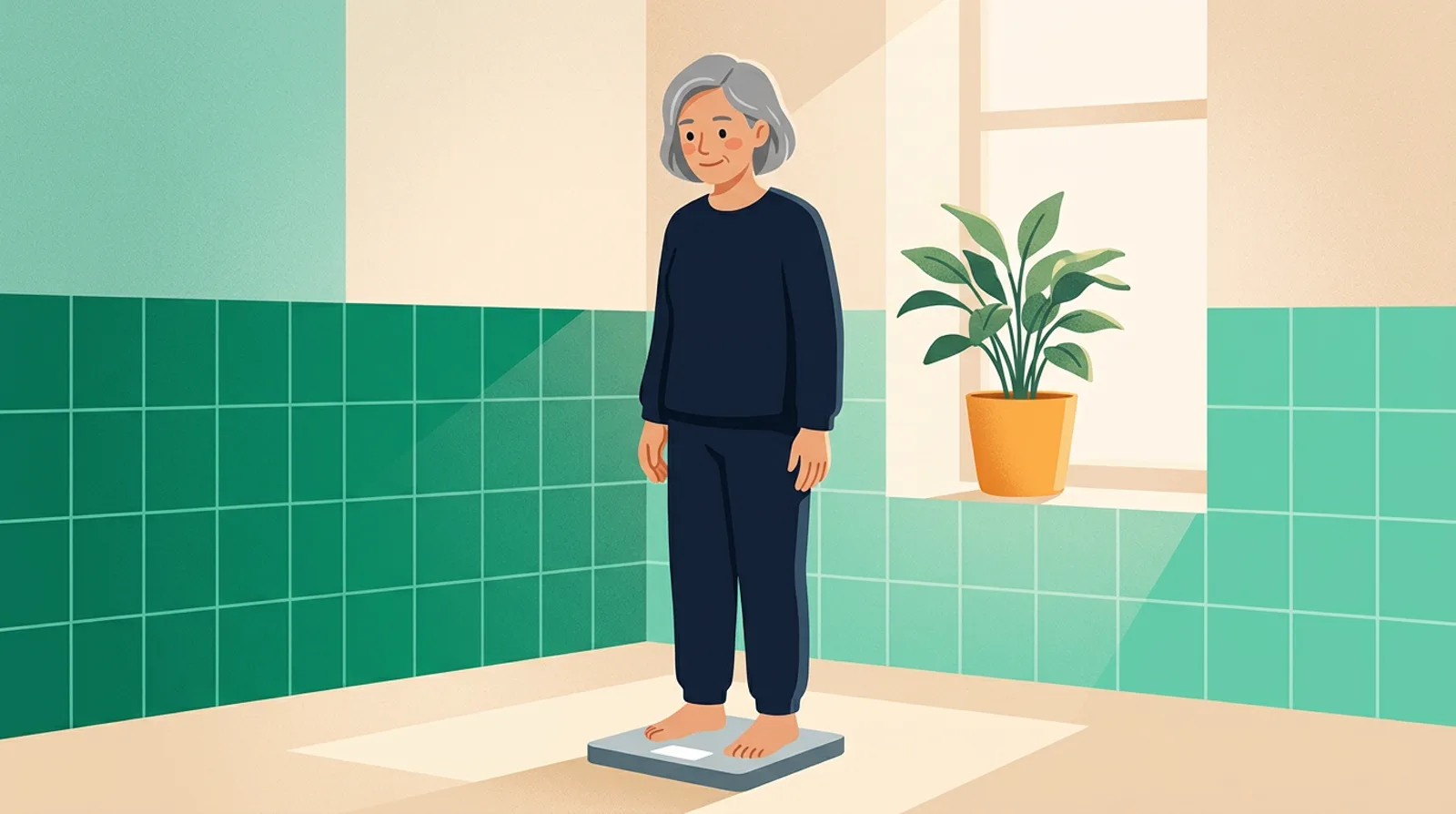
- Weigh yourself once a week at the same time. Look at the trend over 3 to 4 weeks, not one day.
- Skip extreme goals. Our guide on burning 1,000 calories a day explains why they backfire.
When to see a doctor
Talk to a doctor or registered dietitian before you start a calorie deficit if you are pregnant or breastfeeding, under 18, have diabetes, heart or kidney disease, or have had an eating disorder. Also check first if you take medicines that affect your weight, appetite or blood sugar.
See a doctor if you feel dizzy, faint or very tired, or if you lose weight fast without trying.
Frequently asked questions
How do I calculate my calorie deficit?
Estimate how many calories you burn in a day, then take away a deficit for your pace. Using the common rule of thumb, that is about 500 calories a day to lose 1 pound a week. Our calculator does both steps and shows your daily target.
Is a 500 calorie deficit enough to lose weight?
For many adults, yes. Under the 3,500-calorie rule of thumb, 500 calories a day is about 1 pound a week, which is inside the CDC’s 1 to 2 pound range. Your real loss may be faster or slower, and it usually slows over time.
Is a 1,000 calorie deficit safe?
A 1,000 calorie deficit matches about 2 pounds a week, the top of the CDC range. For smaller or less active people it can mean eating less than their resting burn. If the calculator warns you, choose a slower pace or talk to a doctor.
How long does it take to see results from a calorie deficit?
Give it 3 to 4 weeks before you judge. Day-to-day weight goes up and down with water and food, so one weigh-in tells you little. Compare your weekly weigh-ins over a month, then adjust your target if the trend is flat.
Why am I not losing weight in a calorie deficit?
Common reasons are underestimating what you eat, a burn estimate that is too high, or your body burning less as you get lighter. Track food honestly for 2 weeks, then lower your target a little or add activity.
Can I eat whatever I want in a calorie deficit?
You can lose weight with any foods if your calories are low enough, but the mix matters for hunger and health. NIH says small amounts of favorite foods can fit, as long as you burn more than you take in.
Is the 3,500 calorie rule accurate?
Only roughly. A 2008 NIH paper by Kevin Hall found it fits people with obesity fairly well, but overestimates the deficit needed for people with less body fat. It also ignores how your burn drops as you lose weight.
The bottom line
A calorie deficit calculator gives you a sensible daily target to start with. Aim for the CDC’s steady 1 to 2 pounds a week, check your weekly trend for a month, and adjust. If the target looks too low, slow down or move more.
Related reading
- How many calories do I burn a day? Free calculator
- Weight loss plateau: honest reasons and how to restart
- How many steps a day to lose weight: a 4-week plan
- Burning 1,000 calories a day: is it safe?
Sources
- CDC: Steps for Losing Weight (17 Jan 2025)
- Hall KD. What is the required energy deficit per unit weight loss? Int J Obes, 2008 (NIH PMC)
- NIDDK (NIH): Treatment for Overweight and Obesity (reviewed May 2023)
- NIDDK (NIH): Body Weight Planner
- Mifflin MD, St Jeor ST, et al. A new predictive equation for resting energy expenditure in healthy individuals. Am J Clin Nutr, 1990
- FAO/WHO/UNU: Human energy requirements, chapter 5 (physical activity level)
- CDC: Physical Activity Guidelines for Adults