
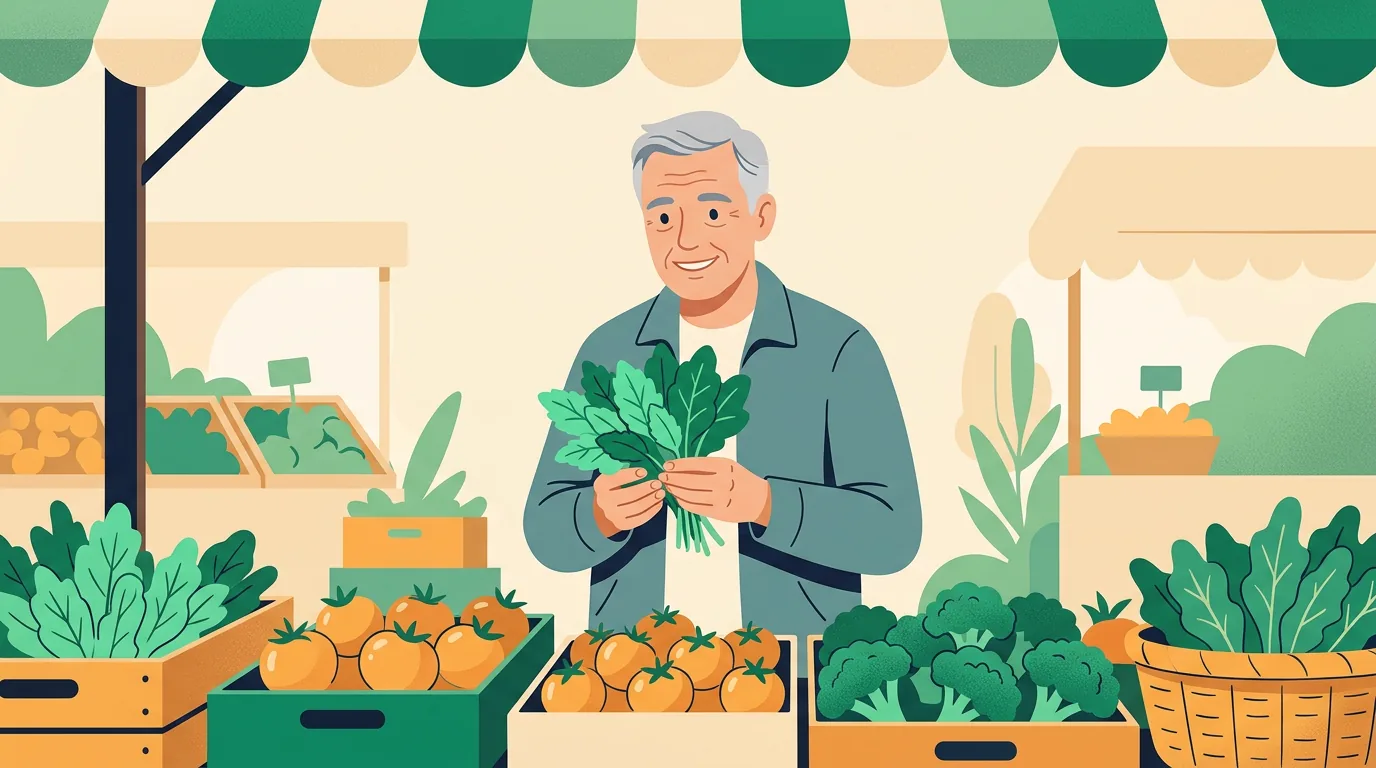
If you are searching for foods to avoid for prostate health, here is the short, honest version. Very few foods have a proven, strong link to prostate problems. A handful have modest or mixed evidence, and I have rated each one below.
This guide covers prostate cancer risk and enlarged prostate (BPH) symptoms separately, because the evidence differs. It also lists what to eat more of, and which supplements the research does not back up.
Key takeaways
- No food on any list of foods to avoid for prostate health is proven to cause prostate cancer. Most diet evidence is observational and graded weak to moderate.
- For urinary symptoms, the NHS advises cutting down on alcohol and caffeine, because they make you pee more.
- Weight, activity and your overall eating pattern probably matter more than any one "worst food".
Do foods to avoid for prostate health really matter?
Short answer: a little, but less than headlines suggest. Researchers have not found a way to prevent BPH, according to the NIDDK. For prostate cancer, the NCI says it is not known whether cutting fat or eating more fruit and vegetables lowers risk. Diet is worth tuning, but age, family history and genetics count for more.
BPH affects about 5% to 6% of men aged 40 to 64 and 29% to 33% of men 65 and older, per the NIDDK. Risk is higher with obesity, type 2 diabetes, heart disease and a sedentary lifestyle.
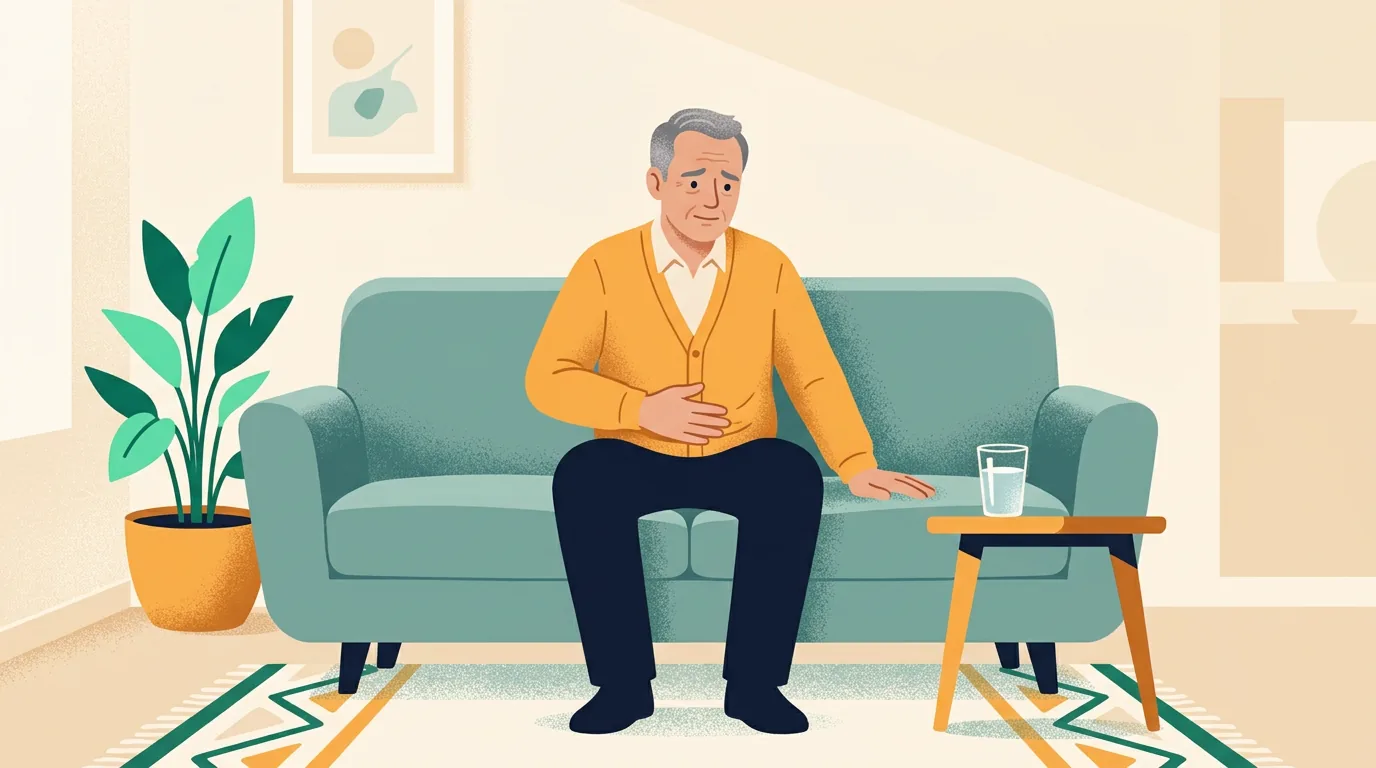
Foods to avoid for prostate health: evidence strength at a glance
Here is each food, what studies suggest, and how much trust to place in it. "Observational" means researchers tracked what people ate and what happened later. That can show a link, not proof of cause.
| Food | What studies suggest | Strength of evidence |
|---|---|---|
| Dairy and high-calcium diets | NCI: a diet high in dairy and calcium may cause a small increase in prostate cancer risk. A 2021 review also reported milk might be linked to higher risk. | Modest. Small effect, observational. |
| Processed meat | Meta-analyses disagree. 2010 and 2015 reviews found no independent link. A 2022 review found RR 1.06 for total prostate cancer. WHO rates processed meat a carcinogen, mainly for bowel cancer. | Weak and mixed. |
| Red meat | The 2010 and 2015 reviews found no link to total prostate cancer. WHO says there is some evidence of a link to prostate cancer, but calls the evidence limited. | Weak and mixed. |
| Heavy alcohol | Reviews of many studies found a positive association between heavy drinking and prostate cancer. A 2020 analysis found the pattern differed by drink type. For BPH, a 2014 review linked moderate drinking to lower risk. | Moderate for heavy drinking. Unclear for light drinking. |
| Coffee and caffeine (urinary symptoms) | In one cohort, men drinking over 2 cups of coffee a day had about double the odds of symptom progression (OR 2.09) versus none. The NHS advises cutting down on caffeine and alcohol for an enlarged prostate. A 2017 review found coffee linked to lower prostate cancer risk. | Moderate for symptoms. Not a cancer risk. |
| Fatty, fried and animal-heavy diets | NCI says fat and meat effects are uncertain; some fatty acids raised high-grade risk and others lowered it. A 2014 review linked meat and fat to higher BPH risk. A 2025 review linked low-fibre, animal-heavy diets to urinary symptoms. | Weak to unclear. |
Notice what is missing from this list of foods to avoid for prostate health: no row says "proven." A 2016 review of 23 foods and 31 nutrients found no diet link with strong evidence for prostate cancer. Dietary calcium and spirits were graded only "suggestive."
Foods bad for enlarged prostate symptoms
For BPH, the foods to avoid for prostate health are about urinary symptoms, not cancer. So the useful question is what makes you go more often or more urgently.
Alcohol and caffeine
These are the two the NHS names. Both can make you pee more. If nights are the problem, try cutting coffee after midday and having alcohol earlier, or less often.
Keep drinking water through the day. The NHS warns against cutting fluids drastically, which risks urinary infections. It suggests easing off drinks before bed or before going out.
Low-fibre eating
The NHS says to get enough fibre, because constipation can put extra load on your bladder. A 2025 review also found diets high in animal foods and low in fibre are tied to more inflammation and urinary symptoms.
Extra weight
The NHS notes that excess weight may make symptoms worse. Eating less ultra-processed food is one practical way to manage it. This guide to healthy fast food options may help when you eat out.
Foods often blamed that I could not verify
Many sites list sugar, salt and spicy food as foods to avoid for prostate health. I checked the NHS, NIDDK and NCI pages and found no evidence on these for prostate health. I have left them off the table instead of guessing.
If spicy food or a sugary drink clearly sets off your symptoms, avoid it. Your own pattern is useful information. Just do not expect it to protect against cancer.

Best foods for prostate health: what to eat more of
The evidence for protective foods is also modest. Still, these choices fit an overall healthy pattern, with little downside.
Tomatoes and cooked tomato products
A 2015 meta-analysis of 26 studies found higher lycopene intake linked to lower prostate cancer risk. A 2013 analysis found only a modest effect (OR 0.93, confidence interval crossing 1). The NCI calls results mixed.
Lycopene pills are a different story. A 2022 review of six trials found no change in PSA levels. Get it from food.
Vegetables, beans and fibre
A 2014 review found higher vegetable intake linked to lower BPH risk. The NCI reports that natural folate from green vegetables and beans was linked to lower prostate cancer risk. Cruciferous vegetables such as broccoli show a possible link, but researchers say more work is needed.
Fish
Evidence here is weak. An umbrella review in 2020 found only weak links between omega-3 and prostate cancer, and a 2021 study found none. One 2023 analysis suggested better survival in men already diagnosed. Fish is still a sensible swap for processed meat.
An easy day of eating
- Breakfast: oats with berries, plus coffee before midday. Try these anti-inflammatory breakfast ideas.
- Lunch: lentil and vegetable soup with wholegrain bread.
- Dinner: grilled fish with cooked tomato sauce and greens.
- Evening: water earlier, herbal tea later, and alcohol kept modest.
Lifestyle habits that count for more than any single food
The NIDDK says physical activity may reduce the risk of BPH. A 2024 umbrella review also found occupational physical activity linked to lower prostate cancer odds (OR 0.87). Cancer Research UK says excess weight may be linked to a higher risk of metastatic prostate cancer, though more research is needed.
So a daily walk, a healthier weight and steady sleep are better bets than any list of foods to avoid for prostate health. Gentle movement such as somatic yoga can help you start.
Supplements for prostate health: what the evidence shows
- Saw palmetto: the NCCIH cites a 2023 systematic review concluding it is probably not helpful for BPH symptoms. Two NIH-funded trials found no improvement, even at triple doses.
- Selenium and vitamin E: the NCI says they did not lower prostate cancer risk, and vitamin E alone increased it.
- Folic acid (1 mg): the NCI reports synthetic folic acid supplements increased risk, while folate from food did not.
- Lycopene supplements: no change in PSA in a 2022 review of trials.
The research does not support claims that a supplement can treat or shrink the prostate. Always check with your doctor before starting one, especially if you take medicines.
When to see a doctor
Do not use diet to self-treat urinary symptoms. See your doctor if you pee much more often, have a weak stream, wake often at night, or have any pain or blood. Ask about PSA testing based on your age and family history.
Frequently asked questions
What are the worst foods for prostate health?
No food is proven to be the worst of the foods to avoid for prostate health. The best-supported concerns are heavy alcohol, a diet high in dairy and calcium (a small increase in risk per the NCI), and, for urinary symptoms, excess caffeine. Evidence on red and processed meat is mixed.
Is dairy bad for the prostate?
The NCI says a diet high in dairy and calcium may cause a small increase in prostate cancer risk. The effect looks small and comes from observational studies. You do not need to cut dairy entirely. Moderation is reasonable.
What foods make an enlarged prostate worse?
The NHS advises cutting down on alcohol and caffeine, as they make you pee more. It also advises enough fibre and a healthy weight. Beyond that, trigger foods vary from person to person.
Does red meat cause prostate cancer?
Studies disagree. Reviews from 2010 and 2015 found no independent link, while a 2022 review found a small increase for processed meat (RR 1.06). WHO calls the evidence for prostate cancer limited.
Is coffee bad for an enlarged prostate?
It can be for symptoms. One large cohort linked more than 2 cups a day to higher odds of symptom progression. Coffee itself was linked to lower prostate cancer risk in a 2017 review, so it is a symptom issue, not a cancer one.
Do tomatoes help prevent prostate cancer?
Maybe a little. Studies suggest lycopene from food may lower risk modestly, but results are mixed and the NCI has not confirmed it. Lycopene supplements did not change PSA in a 2022 review.
The bottom line
No single food is proven to cause prostate problems, so treat any list of foods to avoid for prostate health with caution. Cut back on alcohol and caffeine if urinary symptoms bother you, and focus on weight, activity and your overall eating pattern. See a doctor about urinary symptoms.
Related reading
Sources
- NIDDK. Prostate Enlargement (Benign Prostatic Hyperplasia)
- NCI. Prostate Cancer Prevention (PDQ)
- NHS. Enlarged prostate: Treatment and self-help
- NHS. Prostate cancer: Causes
- Cancer Research UK. Prostate cancer risks and causes
- NCI. Obesity and Cancer
- WHO. Carcinogenicity of red meat and processed meat
- NCCIH. Saw Palmetto
- Cui H, et al. Risk factors for prostate cancer: an umbrella review PLoS Med, 2024.
- Markozannes G, et al. Diet, body size, physical activity and prostate cancer risk Eur J Cancer, 2016.
- Zhang X, et al. Milk consumption and health outcomes (umbrella review) Nutr Metab, 2021.
- Grosso G, et al. Coffee, caffeine, and health outcomes Annu Rev Nutr, 2017.
- Alexander DD, et al. Meta-analysis of red and processed meat intake and prostate cancer Nutr J, 2010.
- Bylsma LC, Alexander DD. Meta-analysis of red and processed meat, cooking methods, heme iron, HCAs and prostate cancer Nutr J, 2015.
- Nouri-Majd S, et al. Red and processed meat consumption and risk of prostate cancer Front Nutr, 2022.
- Bagnardi V, et al. Alcohol consumption and site-specific cancer risk Br J Cancer, 2015.
- Alcohol consumption and the risk of prostate cancer: a dose-response meta-analysis Nutrients, 2020.
- Maserejian NN, et al. Beverage intake and lower urinary tract symptoms Am J Epidemiol, 2013.
- Raheem OA, Parsons JK. Obesity, physical activity and diet with BPH and LUTS Curr Opin Urol, 2014.
- Cai T, et al. Lifestyle and the microbiome in male LUTS due to BPH Eur Urol Focus, 2025.
- Chen P, et al. Lycopene and risk of prostate cancer: meta-analysis Medicine, 2015.
- Chen J, et al. Tomato and lycopene intake and prostate cancer J Nutr Sci Vitaminol, 2013.
- Sharifi-Zahabi E, et al. Lycopene and PSA: meta-analysis of RCTs Complement Ther Med, 2022.
- Lee KH, et al. Omega-3 and cancer: umbrella review Adv Nutr, 2020.
- Farrell SW, et al. Omega-3 index and prostate cancer risk Nutrients, 2021.
- Wang Y, et al. Fish, marine omega-3 and cancer survival: meta-analysis Crit Rev Food Sci Nutr, 2023.
[…] Top Ten Worst Foods for Prostate Health: What to Avoid for a Stronger, Healthier Future […]
[…] Top Ten Worst Foods for Prostate Health: What to Avoid for a Stronger, Healthier Future […]
[…] Top Ten Worst Foods for Prostate Health: What to Avoid for a Stronger, Healthier Future […]