

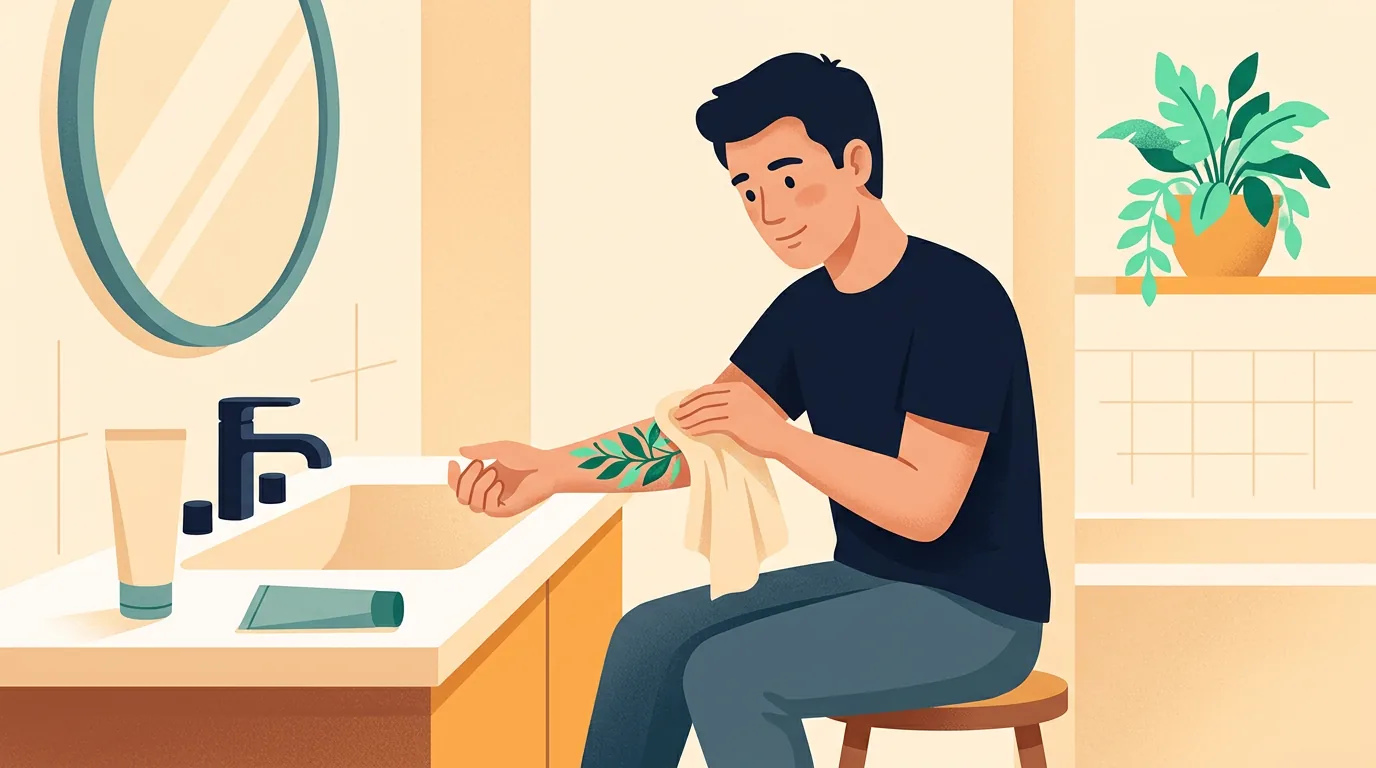
You’ve just got new ink, and now you’re wondering what to do next. Good tattoo aftercare protects your skin from infection and helps your tattoo heal with clean, bright colors.
This guide walks you through 7 simple steps, what’s normal while it heals, the signs that need a doctor, and a quick check you can use any time.
Key takeaways
- A new tattoo is a skin wound. Wash it gently with soap, pat it dry and don’t pick at scabs.
- Some redness, swelling and tenderness at first is normal. Redness that spreads, pus or fever is not.
- Keep a new tattoo out of baths, pools and the sea, and out of direct sun.
What is tattoo aftercare?
Tattoo aftercare means looking after a new tattoo while your skin heals, so it doesn’t get infected and the ink settles well. In short: wash it gently with soap, pat it dry, use a thin layer of the product your artist recommends, keep it out of water and sun, and never pick at it.
Why aftercare matters
A tattoo puts ink into the dermis, the middle layer of your skin. A 2024 review in the journal Arhiv za higijenu rada i toksikologiju explains that infections can start during tattooing if hygiene is poor, or later from poor skin care while the tattoo heals.
The FDA warns that even sealed inks can be contaminated with germs, and that infections can also come from equipment that isn’t sterile. You can’t control the ink, but you can control how you care for the skin afterwards.
Tattoo aftercare in 7 steps
These tattoo aftercare instructions come from the Better Health Channel (Victoria State Government), the American Academy of Dermatology (AAD) and the FDA. Your artist may add their own steps; follow those too.
1. Leave the first dressing on
Your artist covers a new tattoo with a sterile dressing. Leave it on for as long as they tell you, and wash your hands before you take it off.
2. Wash it 2 to 3 hours later
The Better Health Channel says to wash the area with soap two to three hours after being tattooed, then pat it dry with a clean towel. Keep washing it gently with soap after that. Don’t scrub.
3. Apply a thin layer of product
Put on a thin layer of the ointment your tattooist or a health professional recommends, and add more when the skin feels dry. For dry tattooed skin later on, the AAD suggests a water-based lotion or cream. It also notes that petroleum-based products, such as petroleum jelly, can fade the ink.
4. Hands off the scabs
Don’t touch the tattoo more than you need to, and don’t pick at any scabs, the Better Health Channel advises. Picking can pull out ink and let germs in. Itching is common, but scratching makes it worse.
5. Keep it out of the water
Avoid soaking a new tattoo in a bath, a swimming pool or the sea. Short showers are fine; just don’t let it sit in water.
6. Wear loose, clean clothes
Tight or dirty clothing can rub the tattoo and trap germs, so choose loose, clean fabric over it while it heals.
7. Protect it from the sun
Keep a healing tattoo out of direct sunlight. Once it has healed, the AAD recommends a broad-spectrum, water-resistant sunscreen of SPF 30 or more, put on 15 minutes before you go out and reapplied at least every two hours. UV light can fade some inks.

What normal healing looks like
New tattoo healing has a few common phases. Knowing them makes tattoo aftercare easier, because you can tell normal from not normal.
| Phase | What you might notice | What to do |
|---|---|---|
| Right after | Some bleeding, irritation and tenderness (Better Health Channel) | Leave the dressing on as your artist says |
| First days | Redness, swelling or warmth that slowly eases (FDA, AAD) | Wash gently, pat dry, thin layer of product |
| As it settles | Itching, flaking or light scabs | Don’t pick or scratch; keep it moisturized |
| After healing | Skin feels normal again | Sunscreen SPF 30+ when outdoors (AAD) |
Healing time varies with the size and place of the tattoo and your own skin, and our sources don’t give a fixed timeline. If your tattoo doesn’t seem to be healing, get it checked.
Signs of tattoo infection
The AAD lists these warning signs of a tattoo infection:
- Redness that gets darker or spreads instead of fading
- Pain that gets worse
- Fever or chills
- Pus or open sores
The FDA adds that a serious infection can bring a high fever, shaking, chills and sweats. If you have a fever, especially with a rash, get medical care right away.

Healing check: is this normal?
Not sure if what you see is normal? Tick what you notice in this quick check. It points you to normal care or to a doctor, using the signs above.
Tick everything you notice right now. This is a guide, not a diagnosis. Nothing is saved or sent anywhere.
Allergic reactions to ink
An allergic reaction to tattoo ink can show up as a rash, bumps or itching. The AAD says red ink is often the culprit, but any color can cause it, and a reaction can start right away or weeks, years or even decades later.
For a mild reaction, tell your tattoo artist and ask about the ink. If it lasts longer than 1 or 2 weeks, the AAD says to see a board-certified dermatologist. The FDA suggests asking your artist for the ink’s brand, color and lot number, and reporting the reaction to the FDA.
When to see a doctor
Good tattoo aftercare also means knowing when to get help. See a doctor promptly if you notice any of these, based on advice from the Better Health Channel, the AAD and the FDA.
- Redness, swelling or pain that is getting worse, not better
- Pus, an open sore, or bleeding or discharge that won’t stop
- A fever, chills or shaking
- A rash or reaction that lasts more than 1 or 2 weeks
- A tattoo that just isn’t healing
If you feel very unwell, call 911 or your local emergency number. The CDC also warns that hepatitis C can spread through tattoos done in unlicensed places, informal settings or with tools that aren’t sterile, so choose a licensed studio.

Frequently asked questions
What should I do right after I get a tattoo?
Leave the sterile dressing on for as long as your artist says. Two to three hours after the tattoo, the Better Health Channel advises washing it gently with soap and patting it dry with a clean towel, then applying a thin layer of the ointment your artist recommends.
Is Vaseline or Aquaphor better for tattoos?
Use the product your tattoo artist recommends. For dry tattooed skin, the American Academy of Dermatology suggests a water-based lotion or cream and warns that petroleum-based products, such as petroleum jelly, can cause tattoo ink to fade.
How long does a tattoo take to heal?
It depends on the size and place of the tattoo and your own skin, so there is no single timeline. Early redness and swelling should ease over the first days. If your tattoo does not seem to be healing, see a doctor.
Can I shower after getting a tattoo?
Yes, short showers are fine once the first dressing is off, and gentle washing with soap is part of tattoo aftercare. Avoid soaking the tattoo in a bath, swimming pool or the sea while it heals.
How do I know if my tattoo is infected?
The AAD lists redness that gets darker or spreads, worsening pain, fever, chills, pus and open sores as warning signs. Some redness and swelling at first is normal. If you notice warning signs, see your doctor or a dermatologist right away.
Why is my new tattoo peeling?
Flaking and light scabbing are common as a new tattoo settles. Do not pick or scratch them, because that can pull out ink and let germs in. Keep washing gently and apply a thin layer of the product your artist recommends.
When can I put sunscreen on my tattoo?
Keep a healing tattoo out of direct sun. Once it has healed, the AAD recommends a broad-spectrum, water-resistant sunscreen of SPF 30 or more, put on 15 minutes before going out and reapplied at least every two hours.
The bottom line
Good tattoo aftercare is simple: wash gently with soap, pat dry, use a thin layer of your artist’s recommended product, keep it out of water and sun, and don’t pick. Some redness and swelling at first is normal. Spreading redness, worsening pain, pus or a fever means it’s time to see a doctor.
Related reading
- Tooth nerve pain relief: safe ways while you wait
- Ring avulsion injury: first-aid steps
- Can allergies cause fever?
Sources
- Better Health Channel (Victoria State Government): Tattoos
- American Academy of Dermatology: Caring for tattooed skin
- American Academy of Dermatology: Tattoos: 7 unexpected skin reactions and what to do about them
- FDA: Think Before You Ink: Are Tattoos Safe?
- CDC: Hepatitis C Prevention and Control
- Dodig S, et al. Tattooing: immediate and long-term adverse reactions and complications. Arh Hig Rada Toksikol, 2024